












Reading in English | Read in العربية (Arabic)
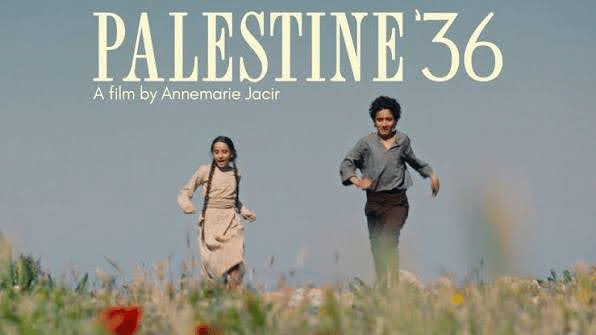
We should never have to fight for our own freedom. Palestine 36, Directed and Written by Annemarie Jacir, depicts the time of the 1936-1939 Arab Uprising against the British Empire’s Mandate for Palestine. Each story beat builds upon a growing tension, capturing how British colonial rule tightly and quietly pressures the Palestinian people to fight for their land and freedom. Despite the steady progression of the overarching plot, certain scenes feel abruptly cut short, leaving the audience hanging and wondering what will happen next.
This ensemble of actors captures the true, complex human scale of the era, as we follow farmers, families, dockworkers and dreamers, represented by a talented and culturally diverse cast.
Experiencing the film’s conflict through the eyes of the child characters Afra (Wardi Eilabouni) and Kareem (Ward Helou) is heartrending, making it all the more crushing when the brutal realities of the uprising leave the two lost, separated and orphaned by the final act.
As a result, the film’s most compelling attribute lies in its shattering timelessness. The tragic transformation of these young protagonists from carefree children to war orphans carries a devastating, heart-wrenching relevance to the modern-day crisis, reminding us that across generations, the heaviest cost of this ongoing conflict continues to be paid by the region’s youth and future generations.
In the end, the true achievement of this film is that it refuses to let history be reduced to mere written dates and typed statistics. By grounding an epic rebellion in the shattered innocence of its youngest characters, Palestine 36 offers a hauntingly beautiful, deep and tragic testament to human resilience. It is a superb, heartbreaking achievement that will linger with audiences long after the screen goes dark.