












Arabic version: يعاني المرضى من فقدان العضلات أثناء انتظارهم لأسرة رعاية المسنين
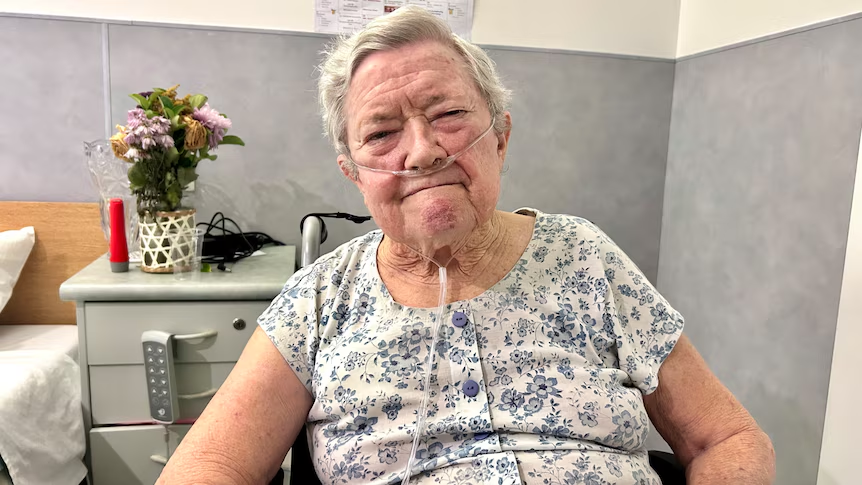
Gwen Webb, an 80-year-old patient, has experienced significant deterioration in her health while waiting for an aged care bed. After spending six months in a temporary hospital bed, Webb has lost the ability to walk and feels like she is wasting away. According to ABC News, there are 3,300 older patients who are medically well yet stuck in hospital beds on aged care waitlists across Australia due to a shortage of aged care facilities.
The situation is dire, with some patients in Queensland waiting for more than 1,000 days for a bed. Webb shared her experience of waiting for 10 weeks at Townsville University Hospital, where more than 100 patients are also awaiting discharge to aged care. Despite her willingness to participate in physiotherapy, the lack of access to support services in her interim care has hindered her recovery.
Experts warn that the lengthy hospital stays are detrimental to the health of elderly patients. Christina Wyatt from Occupational Therapy Australia highlighted that older patients can lose as much as 10 percent of their muscle mass for each week spent in hospital care. The longer these patients remain in hospitals, the greater the risk of their health declining significantly, making recovery more challenging.
The financial burden on the public health system is substantial, with stranded aged care patients costing taxpayers more than $3.3 million every day. Townsville Hospital officials emphasize the need for dedicated aged care facilities, which should offer a more home-like environment for elderly individuals. Queensland Health has stated that the issue requires federal government intervention, although the federal health department has not commented on the situation.
Advocates like Geoff Rowe, CEO of Aged and Disability Advocacy, argue for improved support-in-home programs as a more effective and cost-efficient solution to the crisis. Rowe suggests that investing in preventative services to help older individuals remain independent at home is essential for alleviating the pressure on aged care facilities.