











Arabic version: فريق بيرث يصنع نموذجًا أوليًا لمشيمة صناعية لأطفال الخدج جدًا
Perth researchers at the Women and Infants Research Foundation are developing an artificial placenta designed to support babies born extremely early and give them more time to grow before they must breathe and feed on their own. The project is led by WIRF chief scientist Professor Matt Kemp at King Edward Memorial Hospital for Women.
According to ABC News, the technology aims to provide nutrients and oxygen in a way similar to the uterus. The system is currently being trialled in sheep and connects to the baby via the belly button. The device consists of two small clear perspex blocks about the size of a Rubik’s Cube linked by catheters and hosing; it is a miniaturised gas exchange unit driven by the fetal heart rather than an external pump. Researchers hope it could give some extremely preterm infants an additional three or four weeks to grow.
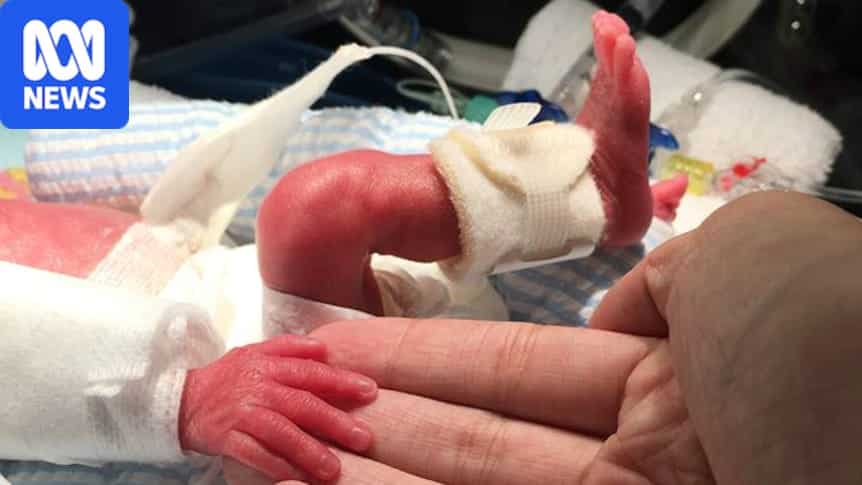
This work matters because babies born at 22 or 23 weeks are extremely small and underdeveloped, with poorly developed lungs and fragile skin, and are often ill at birth when pregnancy complications such as infection or placental dysfunction are present. Survival at the border of viability is poor and long-term outcomes for these infants are frequently worse than for babies born at term, so a technology that can bridge part of that developmental gap could affect survival and lifelong health prospects.
Beyond immediate clinical goals, the artificial placenta is also being used as a bio-discovery tool to study how the placenta and maternal inputs support fetal growth. As researchers refine the device they are encountering new challenges: after reducing circuit resistance so the fetal heart can drive the system, the team found they also need certain growth factors normally supplied by the placenta to support long-term fetal growth. Each engineering solution has revealed further biological questions to solve.
What happens next: the team will continue work and address the additional biological and technical challenges the project uncovers. Professor Kemp estimates the technology remains at least 10 to 15 years away from being used in neonatal intensive care units.
Related sections: Australia/استراليا | Tasmania | Western Australia | General | Social/إجتماعية