












Arabic version: اختبار محمول يستهدف أورام شياطين تسمانيا
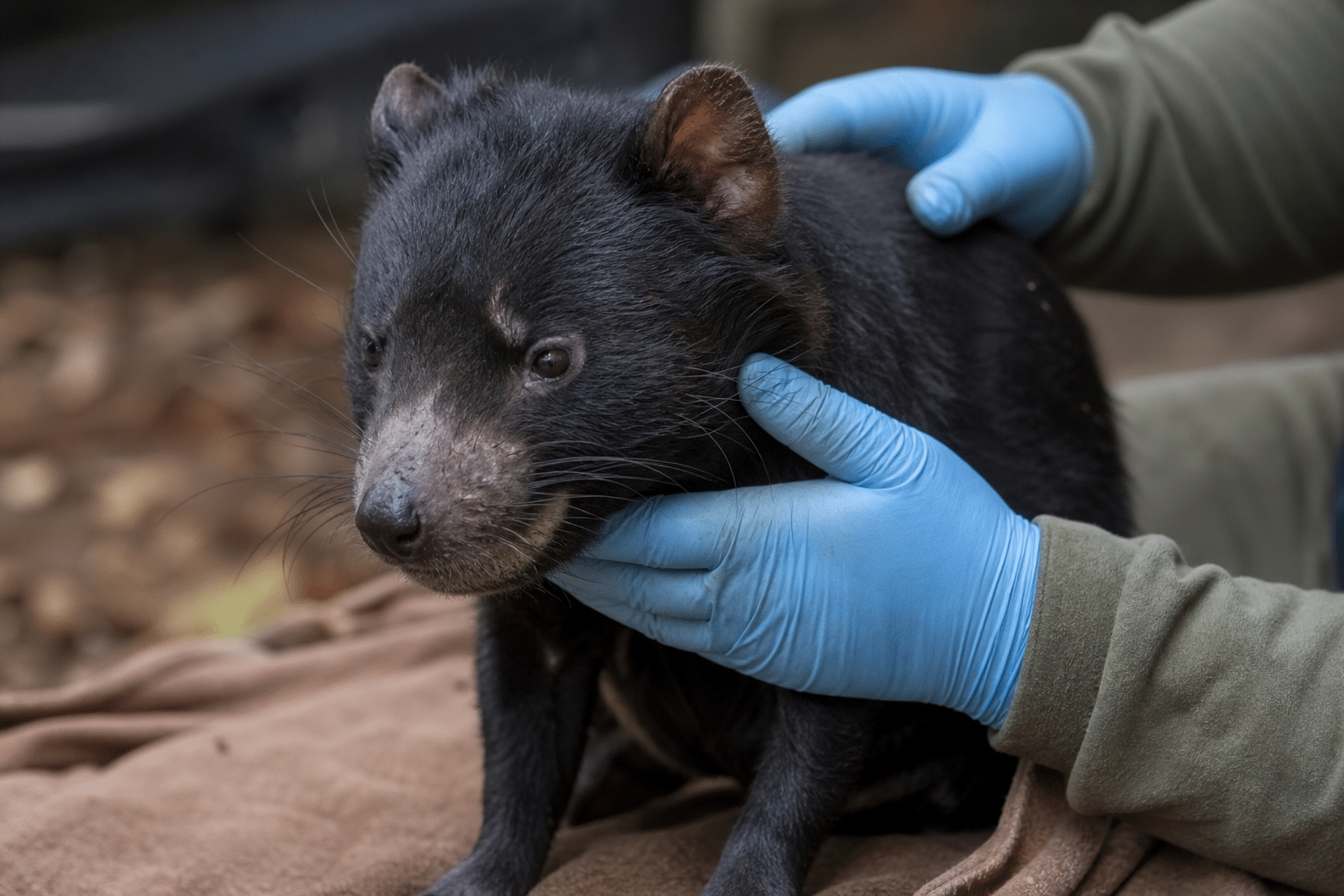
According to ABC News, researchers at the University of Tasmania’s Menzies Institute for Medical Research have developed a portable oral-swab test intended to detect devil facial tumour disease in wild Tasmanian devils. The non-invasive test can provide an immediate result in the field, rather than requiring samples to be sent to a laboratory.
Devil facial tumour disease, or DFTD, is spread through direct contact including biting, as devils pass cancer cells to one another. Tumours grow on the face and body and can make eating increasingly difficult, causing affected animals to starve to death. The disease has reduced devil populations by about 80 per cent in some parts of Tasmania.
Existing testing depends on visible tumours and can take days to return results. Lead researcher Anuk Kruawan said the new method is designed to identify a small amount of DNA where a tumour could develop. A positive reaction makes the test “glow green”, potentially allowing researchers to identify disease before tumours can be seen.
During a trial, researchers conducted 33 tests on 10 Tasmanian devils and three spotted-tailed quolls. Half of the devils tested positive, while none of the quolls returned positive results. Tasmania’s Department of Natural Resources and Environment trapped and handled the animals before oral swabs were collected.
Researchers say early detection could offer insight into the immune system and help guide future treatments. There are two disease strains, with DFTD 1 more prevalent and the second strain still confined to the D’Entrecasteaux Channel region. The team is working with government on a management action plan and continues to develop an oral bait vaccine trial.