Arabic version: الاحتجاجات تجبر الآلاف من المهاجرين على البحث عن ملاذ في جنوب أفريقيا
South Africa has become a hostile place for undocumented migrants, as a deadline set by protesters for them to leave the country approaches. According to BBC News, many migrants are facing intimidation and fear, prompting them to gather in open fields for safety.
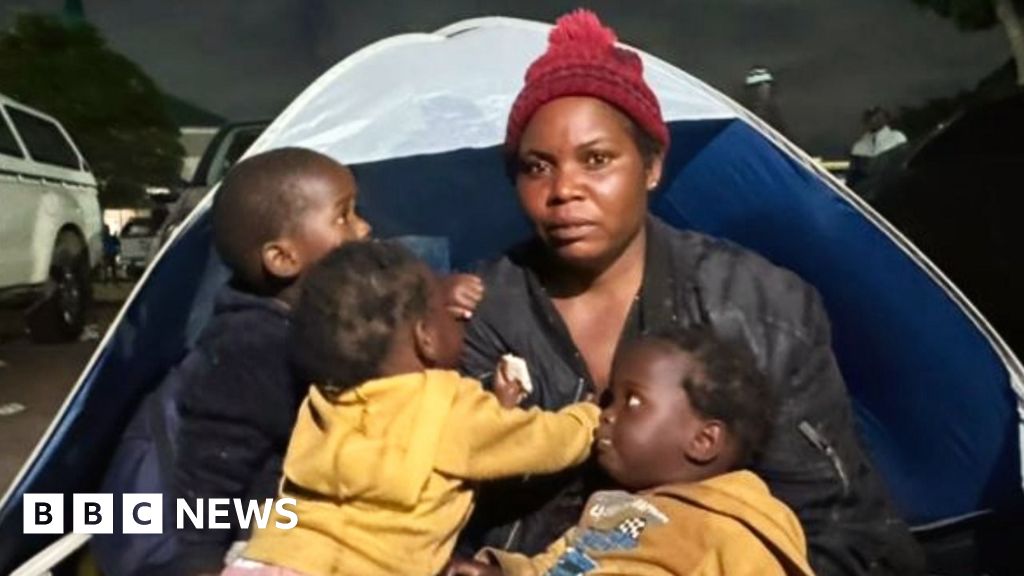
Esnat Joseph, a 36-year-old Malawian woman, fled her home in an informal settlement in the port city of Durban after armed men threatened her family. “You must leave. We don’t want you people to stay here any longer,” she recounted, describing the terror her family endured. Joseph’s husband was seriously injured in the attack, forcing her to seek refuge with her triplets among up to 7,000 foreigners in similar situations.
The protests, organized by the anti-migrant group March and March and supported by opposition party ActionSA, have set June 30 as the deadline for undocumented migrants to leave. Marchers have been vocal, chanting “Mabahambe,” a Zulu term meaning “They must go.” While the protests have remained mainly peaceful, their underlying message is clear and concerning for many.
President Cyril Ramaphosa has cautioned against the “scapegoating of vulnerable people” as a solution to South Africa’s complex economic challenges. The country is grappling with high unemployment rates, which have fueled resentment among some locals towards foreigners. Statistics show that South Africa has a significant foreign population, with over three million residing in the country, many of whom are undocumented.
The situation has escalated fears of violence reminiscent of previous xenophobic attacks, which have left many dead and displaced. Videos circulating on social media have further incited hostility, with incidents of harassment against foreigners being reported. Some migrants, even those with legal status, are feeling increasingly unsafe, leading many to seek protection from authorities.
As the deadline looms, various governments, including those of Ghana, Mozambique, Nigeria, and Zimbabwe, have begun organizing repatriation efforts for their citizens, with thousands already volunteering to leave. The crisis continues to unfold, leaving many to wonder what the future holds for migrants in South Africa.