













Arabic version: وزارة الصحة في كوينزلاند تواجه انتقادات بسبب شغور مناصب القيادة للأبورجين
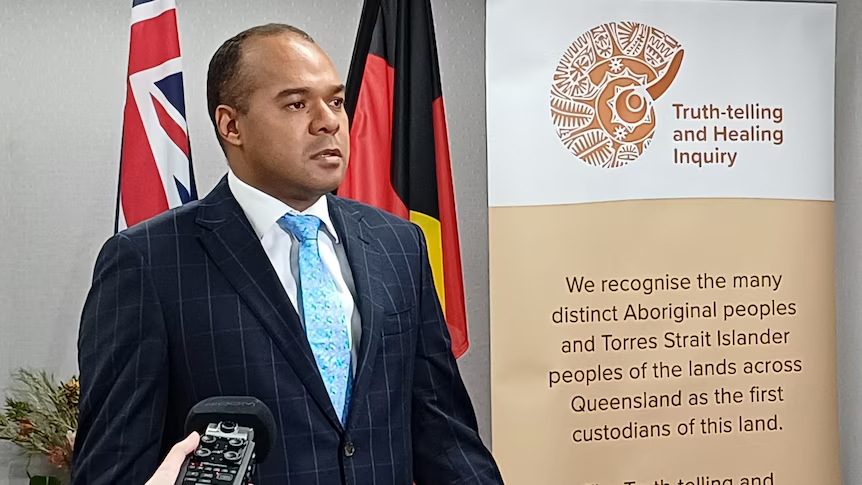
The Queensland government is under fire for a failure to appoint Aboriginal leaders to key health roles, an issue referred to as “Project Invisibility”. This term, coined by Indigenous barrister Joshua Creamer, highlights a troubling trend of removing Aboriginal and Torres Strait Islander individuals from leadership positions within the state’s health system without adequate replacements. According to ABC News, this practice has reportedly intensified since the election in 2024.
Queensland Health insiders have expressed concern that the absence of Indigenous representation on health boards is detrimental to Aboriginal health outcomes. Currently, neither of Brisbane’s major health boards, Metro North and Metro South, have Indigenous directors, despite legislation mandating such appointments. Health Minister Tim Nicholls acknowledged the issue, stating that efforts to find suitable candidates for these roles are underway but may not yield results until later this year.
Critics argue that the lack of Indigenous leadership not only undermines the health system but also sends a message that Indigenous voices are not a priority. Steven Miles, the opposition leader, noted that the government’s inaction on filling these roles suggests a deliberate strategy to diminish Indigenous visibility in high-profile positions. He emphasized that failing to comply with existing laws regarding Indigenous representation diminishes the perceived importance of these roles.
The situation has raised alarms among community advocates, particularly in light of the recent decision not to reappoint Gamilaraay woman Natalie Lewis to the Queensland Family and Child Commission. This vacancy comes at a critical time as the commission addresses issues of abuse and neglect affecting Aboriginal and Torres Strait Islander children in out-of-home care. Without a dedicated Indigenous commissioner, there are fears that vital perspectives and recommendations may be overlooked, potentially leading to further marginalization of Indigenous communities in policy decisions.