
Arabic version: صور مُكتشفة من جديد توثّق مجتمعات مخيمات إضراب بيلبارا
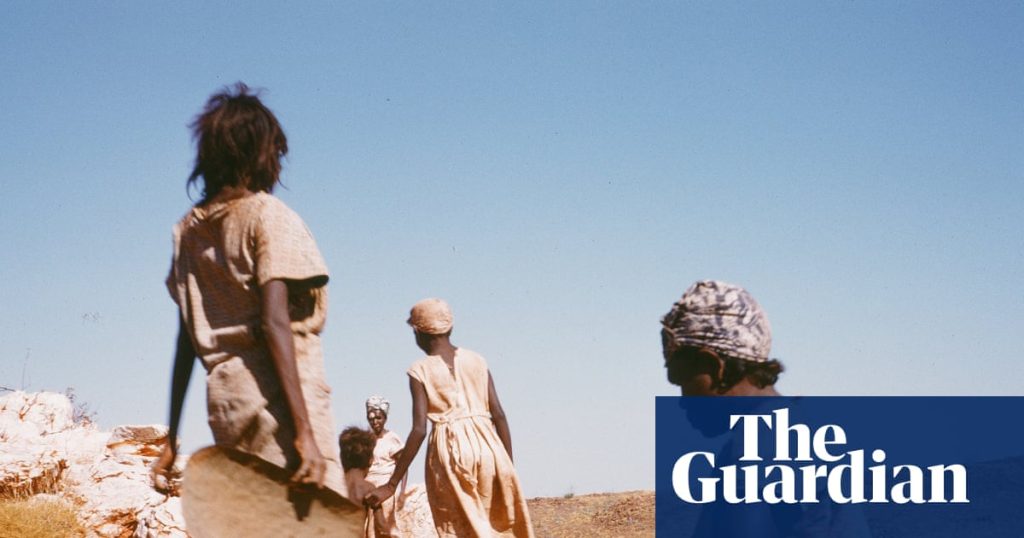
According to The Guardian, rediscovered colour photographs by anthropologist John Wilson document the independent Aboriginal mining communities formed after the 1946 Pilbara strike. The images are displayed in Strike Camps: The Photographs of John Wilson at the Lawrence Wilson Art Gallery at the University of Western Australia in Perth until 5 December.
About 800 Aboriginal workers walked off Pilbara pastoral stations in 1946 over appalling conditions and meagre wages, with many paid in rations of tea, flour, sugar and tobacco. The action spread across more than 20 stations and some 10,000 square kilometres. It lasted three years and ended in 1949 with improved pay and conditions at two stations, though wider reforms were not fulfilled.
Workers established camps near Port Hedland and Marble Bar, building spinifex shelters and schools. They supported themselves through mining tin, beryl and other minerals, pearl shelling and collecting buffel grass seed. In 1952, their mining company, Northern Development and Mining, produced minerals worth £70,000. The camps gave families a measure of independence from pastoralists’ control.
Wilson photographed the communities in the late 1950s and early 1960s while conducting fieldwork with his wife, Katrin. Their daughter Bu found a cache of slides beneath a wardrobe in the family’s Fremantle home, helping reunite an archive of about 350 colour images. UWA art historian Darren Jorgensen, a co-curator, said the archive was the most substantial collection of pictures of the camps.
The exhibition includes 35 photographs and two short films using generative AI to animate scenes of work and daily life, developed in consultation with descendants of the strikers. Nyamal man Troy Eaton saw images of his grandmother, Kakaya Lucy Mitchell, his great-grandmother and other relatives. He said the photographs showed ancestors taking control of their own destiny and described Aboriginal people as “the backbone of this state.”