













Arabic version: ارتفاع التكاليف يواجه وصول الطلاب الإقليميين إلى التعليم العالي
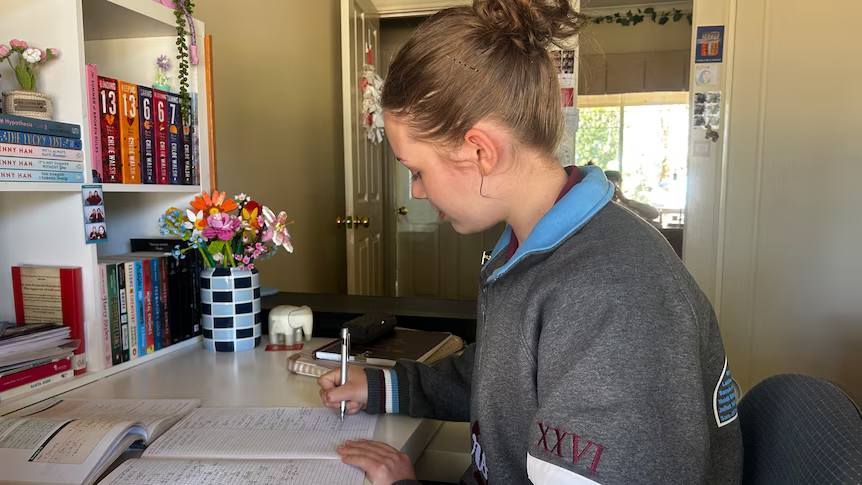
The widening gap between regional and metropolitan students in accessing higher education is becoming increasingly pronounced due to the ongoing cost-of-living crisis. Many regional students, like 16-year-old Trinity Nitschke from South Australia, are facing significant challenges as they plan to relocate to cities for their university education. According to ABC News, the Country Education Foundation has reported that only two in five of its supported students qualify for government assistance.
Trinity, who is preparing to study biomedicine in Melbourne next year, has witnessed her siblings navigate similar transitions, yet she acknowledges the difficulties ahead. “It’s definitely challenging going from such a small community to a big city where it’s a lot busier and more expensive,” she shared. The financial burden of moving to a new city, along with the pressure to find employment, adds to the complexities faced by regional students.
The Country Education Foundation advocates for equal access to education, highlighting that it supported about 800 students across Australia in 2025, 82% of whom needed to leave home to pursue further education or training last year. Chief executive Wendy Mason emphasized the growing struggles due to rising living costs, noting that only one in five students receive family financial support.
Mason pointed out that many students rely heavily on the foundation’s assistance to make their move possible. She expressed hope for increased support for regional students pursuing higher education. Additionally, Federal Education Minister Jason Clare announced plans to introduce legislation aimed at expanding financial support for regional and remote university students, ensuring that those who meet academic requirements can access Commonwealth-supported places.
As Trinity and her family prepare for her upcoming move, they are also optimistic about the opportunities that city life may bring. “For my other children, it enhanced their learning… it’s a great opportunity,” said Paula Nitschke, Trinity’s mother. The support of families and communities plays a crucial role in navigating these transitions for regional students seeking higher education.