












Arabic version: أمطار ريفرلاند تشعل عرضاً استثنائياً من الأزهار البرية
According to ABC News, exceptional rainfall has transformed South Australia’s Riverland into a colourful display of native flowers after three years of record-breaking drought. In some places, rainfall has already exceeded the region’s annual average of 200 to 300 millimetres by 150 per cent, the Bureau of Meteorology said.
At Kulcurna Station, a remote 1922 homestead by the River Murray near the New South Wales and Victoria border, Belinda Hansen said the abundance recalled 1974, when she saw rain, plants and budgies in remarkable numbers. Her area had received about 240mm of rain this year, close to its annual average of about 250mm.
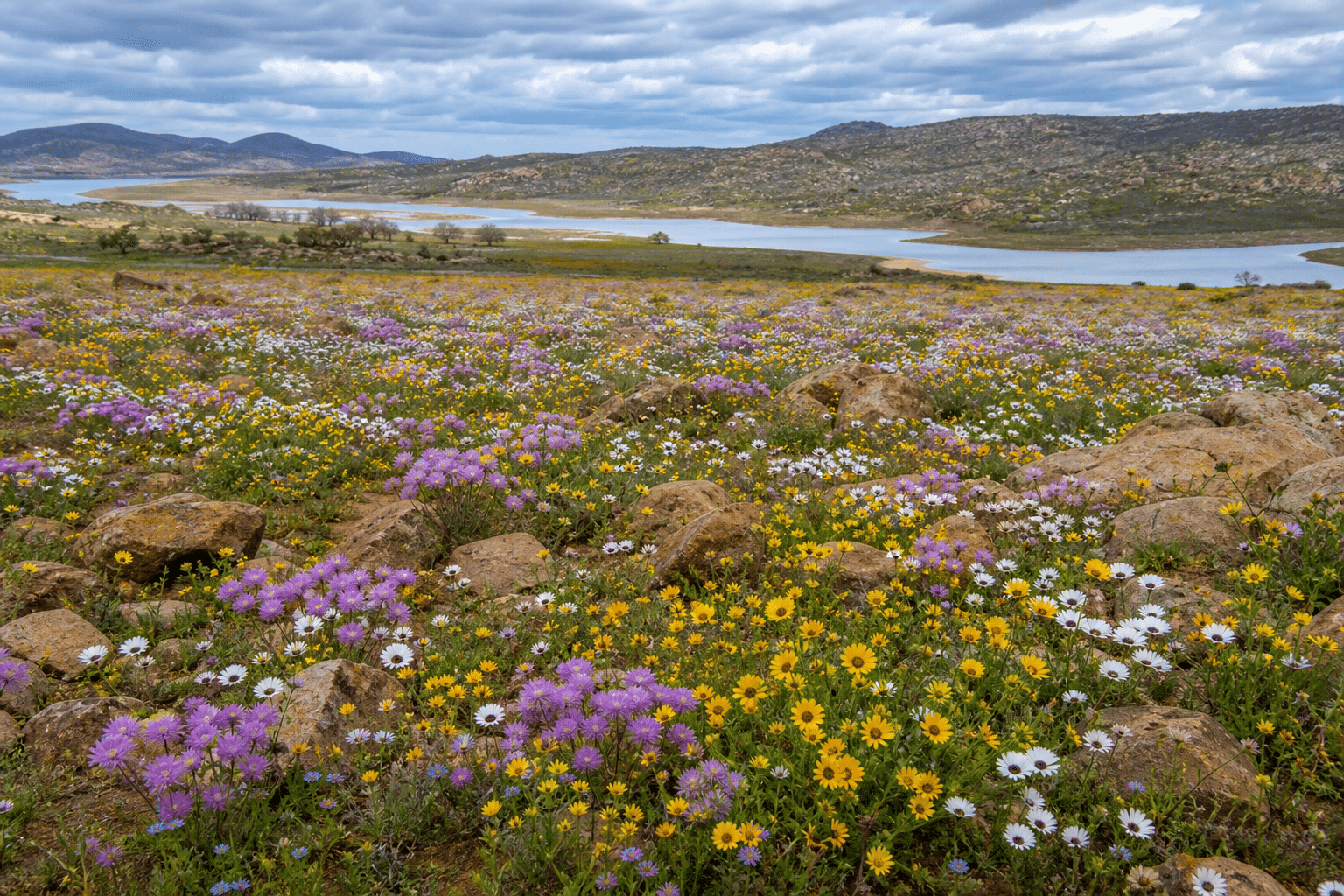
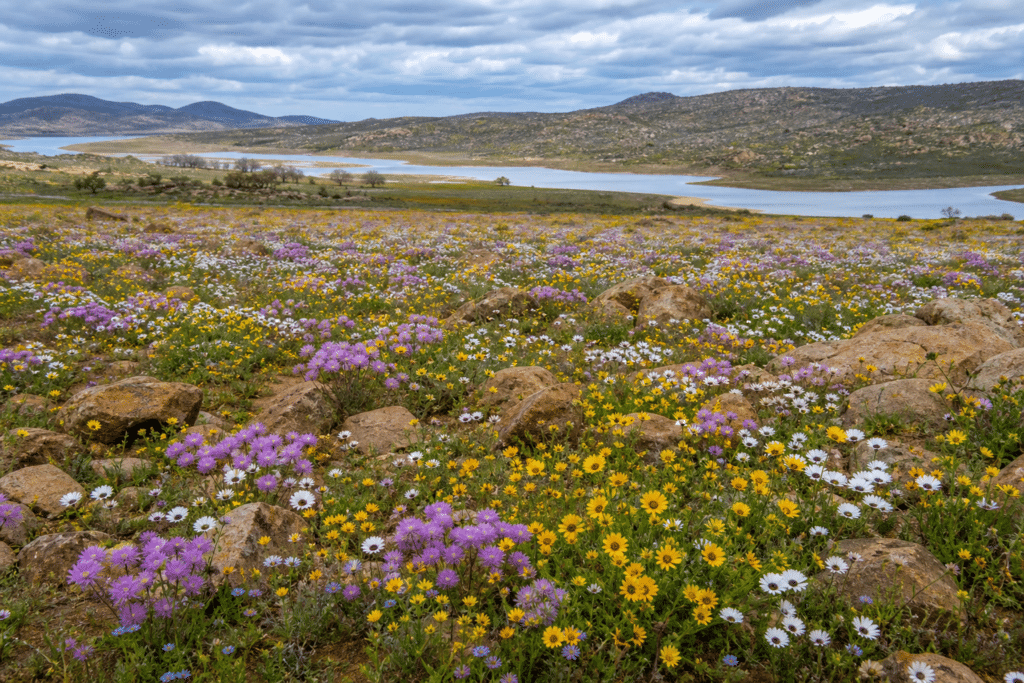
Ms Hansen said consistent rain had allowed plants to grow profusely rather than in isolated sheltered or moist patches. She described a carpet of varying shades of green and swathes of wildflower colour, including poached egg daisies, common stork’s bill, statice known as sea lavender, showy daisies, purple swainsonas and pig face flowers.
Berri Native Plants owner Andrew Walladge said rainfall events had occurred from March onwards, creating an “explosion of colour” in the usually arid landscape. He said the conditions had revealed plants not seen before. Murray River Trails guide Sophie Hoffman said invasive weeds were also flourishing, adding colour despite their capacity to displace native plants and disrupt ecosystems. She said insects and birds were appearing with the flowering event.
The Australasian Fire Authorities Council’s seasonal outlook said South Australia was expected to have a drier-than-average spring. Added growth could increase fuel loads and fire risk in many places during summer. For plant enthusiasts, however, Mr Walladge said the vibrant bushland offered what many people considered a once-in-a-lifetime experience.