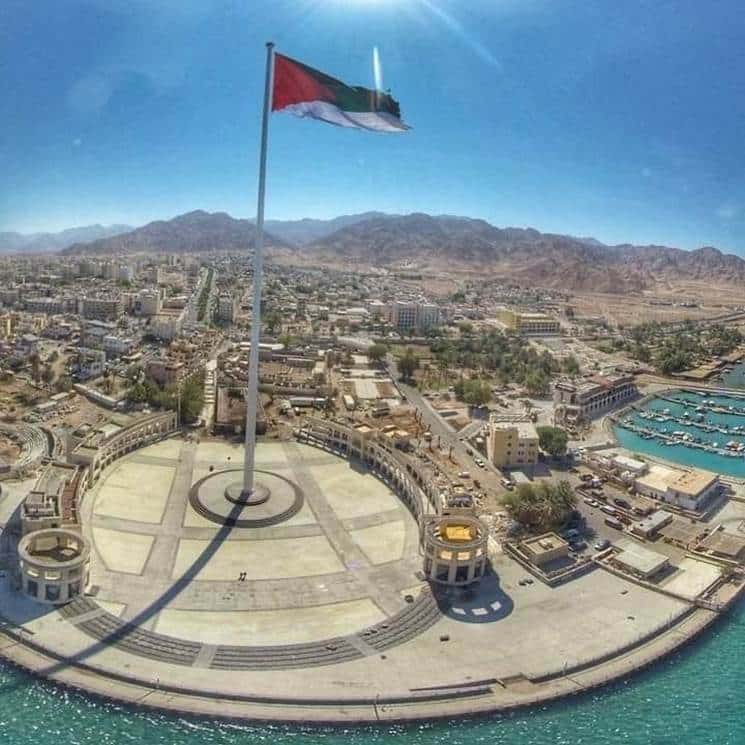
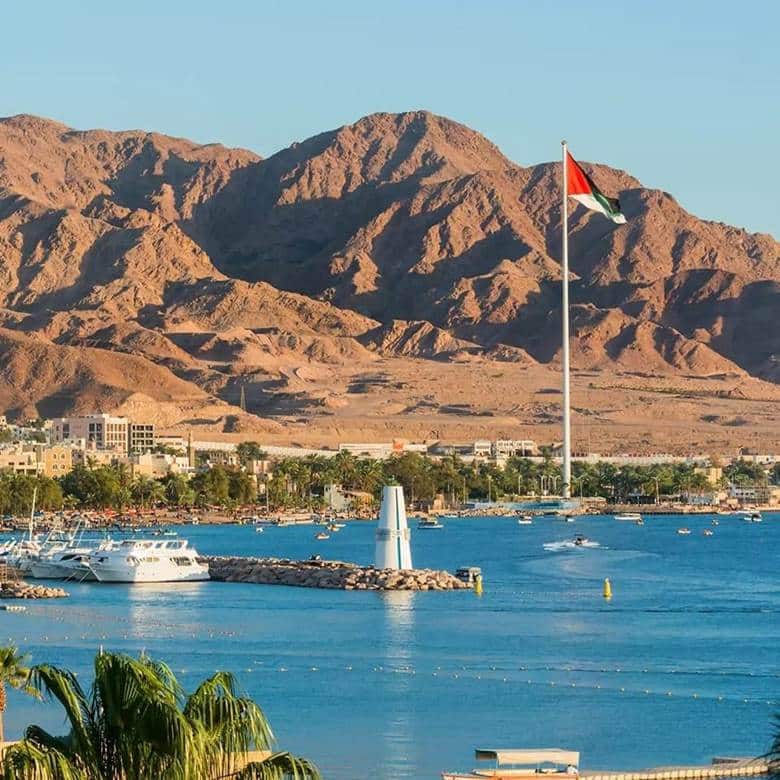
Since its designation as a special economic zone in 2001, the Jordanian city of Aqaba has undergone broad economic, urban, and tourism transformations that have reinforced its role as the kingdom’s maritime gateway and as an integrated center for trade, industry, and logistics services. This transformation has been driven by the royal vision to capitalize on the city’s location and natural assets, create an investment-friendly environment, and simultaneously develop infrastructure, services, and quality of life.Nearly a quarter-century after that initiative began, Aqaba has become a multifunctional city, combining port, industrial, tourism, and service activities alongside population growth and urban development.One sign of the success of the Aqaba Special Economic Zone Authority’s development plan is population growth: the population of Aqaba’s Kasbah has exceeded 200,000, compared with about 70,000 in 2000, while the governorate’s population is estimated at roughly 245,000 versus around 95,000 in 2000, according to data the Authority released at the end of 2025.On the urban front, in August 2024 the Authority, in cooperation with the Japan International Cooperation Agency (JICA), launched the updated comprehensive master plan for 2024–2040. The plan covers land-use regulation and sectoral planning, smart city applications and disaster prevention, and identifies capital projects that support sustainable development and green growth.City services have been expanded to include specialized healthcare: on 27 February 2025 King Abdullah II inaugurated the Hussein Cancer Center building in Aqaba, a project costing about 15 million Jordanian dinars and covering approximately 6,740 square meters. This addition complements five hospitals and 21 health centers—four of which provide comprehensive services—strengthening Aqaba’s role as a regional healthcare hub for the southern area.In tourism, the number of hotels rose to 101 by the end of 2025, with more than 6,500 rooms, up from 43 hotels and about 2,300 rooms when the development plan started. Aqaba welcomed nearly two million visitors in 2024. This has strengthened links between Aqaba and the region’s world-famous filming and heritage sites—Petra and Wadi Rum—with Wadi Rum in 2025 serving as a tourism lever that helped complete the “Golden Triangle” of beach, heritage, and desert.At the same time, Aqaba is expanding into sports tourism through projects such as an international motor-racing circuit designed to meet Formula 3 and higher standards, alongside the Aqaba Equestrian Club and horse-riding facilities. These projects will diversify events and tourism products, attract new visitor segments, and boost demand for accommodation, services, and recreational activities.The Zayed Marina project is a flagship waterfront development. Its first phase was inaugurated in January 2025 as part of a scheme to develop about 3.2 million square meters for tourism, leisure, and residential uses. Announced components of phase one include four residential towers, a residential complex, a hotel and serviced apartments, an old-market area, renovation of the port lighthouse, plus a club, a yacht marina, and a cruise-ship terminal.The environmental dimension gained added importance in 2026 when the Aqaba Marine Reserve was inscribed on the UNESCO World Heritage List, in recognition of its natural value and marine biodiversity. This recognition can promote eco-tourism and scientific research, but it also imposes responsibility to protect marine ecosystems and regulate related activities. The natural resources that give Aqaba its tourism appeal are an economic asset that must be conserved, especially as waterfront investment expands.The ports and logistics sector is a clear indicator of this growth. The number of ports rose from eight in 2001 to 12 specialized ports, with 30 equipped berths. During the first nine months of 2026, the Aqaba Container Terminal handled about 787,000 TEUs, an increase of 6.6% compared with the same period in 2025. Transit containers rose by 151.8% to roughly 116,000 TEUs, reflecting increased use of Aqaba as a gateway for trade to neighboring markets, particularly Iraq.Container handling in August 2026 exceeded 104,000 TEUs across 58 vessels, after about 101,900 TEUs in July. Transit containers in August surpassed 20,000, with more than half headed to Iraq. This activity provides regional employment and additional growth opportunities for transport, storage, customs clearance, and support services, strengthens links between ports, industrial zones, and regional markets, and contributes to the Jordanian economy.The city’s industrial and training base has also expanded. According to the Authority’s end-of-2025 summary, work was underway to develop six industrial zones in the Al Quweira district, four logistics zones, and six logistics yards. Companies registered with the Authority reached 1,764, up from 700 in 2014, creating more than 10,000 private-sector jobs since 2018.These shifts are complemented by transport infrastructure development: King Hussein International Airport was rehabilitated to handle all types of aircraft, with updates to the passenger terminal, facades, operational systems, and baggage-handling that increased its capacity. The airport authority has also signed agreements to operate direct flights to the UAE, Saudi Arabia, and other destinations, boosting tourism and business traffic.The highway network linking Aqaba to other governorates, border crossings, and nearby markets has seen a qualitative leap and continuous upgrades since 2001, coinciding with the city’s special economic-zone designation and the establishment of the Aqaba Development Corporation in 2004. This network facilitates the movement of people and goods, enhancing integration between land, sea, and air transport.The launch of the 15th SOFEX Special Operations Equipment Exhibition and Conference at the Aqaba International Exhibition and Conference Center (AIEC)—opened by King Abdullah II—on Tuesday, 27 October 2026, underscored the city’s growing role across economic, technical, and tourism dimensions. The event featured more than 400 official delegations from 75 countries and 350 exhibiting companies from 38 countries, strengthening the city’s presence as a host for specialized international events.This hosting is economically significant because it generates demand for hotels, transportation, restaurants, and event services, in addition to networking opportunities among participating institutions, companies, and delegations. It also helps diversify tourism by integrating business and conference tourism with beach, eco, and cultural tourism, supporting year-round utilization of facilities.Thus, Aqaba’s experience demonstrates how planning and investment can expand a city’s economic role and link urban development to maritime, tourism, and service functions. Consolidating this transformation depends on turning investments into sustainable jobs and better services, and on ensuring balanced growth that protects the marine environment and meets the needs of residents. The more successfully Aqaba achieves that balance, the stronger its position as Jordan’s economic gateway and as a regional hub that combines business efficiency with quality of life.29/10/2026