

Arabic version: معارضة جزر سليمان تتساءل عن الدعم الأسترالي للميزانية
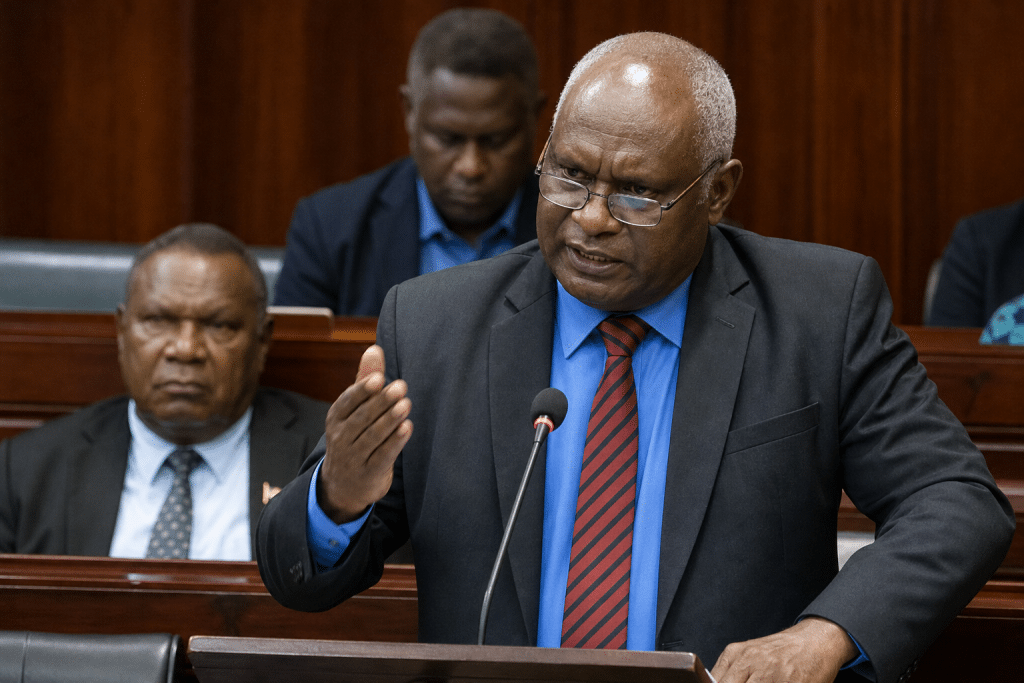
According to ABC News, Solomon Islands opposition leader Manasseh Sogavare has accused Australia of “chequebook diplomacy” after Prime Minister Matthew Wale channelled budget support from Canberra into constituency funds for government MPs while the countries conclude negotiations on a new treaty.
Documents seen by ABC showed multiple parliamentarians in Wale’s 31-strong GREAT Coalition received discretionary grants of up to $SBD1 million, about $180,000, per MP in October and November. The payments came from an account labelled AusAID, but ABC established it belongs to the Solomon Islands government rather than the Australian government.
The funds appear to have come from a $SBD200 million, or $35 million, Australian budget-support package announced by Prime Minister Anthony Albanese in June during Wale’s visit to Canberra. Wale’s government said the support would help respond to Tropical Cyclone Maila and global energy shocks.
Sogavare said Australian taxpayer money was being used to “reward political loyalty” and that constituencies represented by opposition MPs were being unfairly excluded. He also questioned the timing of treaty-related commitments before a no-confidence motion against Wale was withdrawn. Wale’s office declined to comment on the documents.
An Australian federal government spokesperson denied wrongdoing, saying development assistance follows partner-country priorities, accountability and transparency guidelines, and OECD development guidelines. Australia said it had not paid money directly to Solomon Islands MPs; budget support was provided to the Ministry of Finance and Treasury in Honiara. A government source said spending decisions were ultimately made by Wale and his ministers.
The proposed comprehensive treaty is expected to be signed when Wale visits Canberra nine days after the report. Australian National University researcher Kerryn Baker said the payments had poor optics but reflected longstanding disputes over constituency development funds, which she described as important for grassroots development despite risks of politicisation.