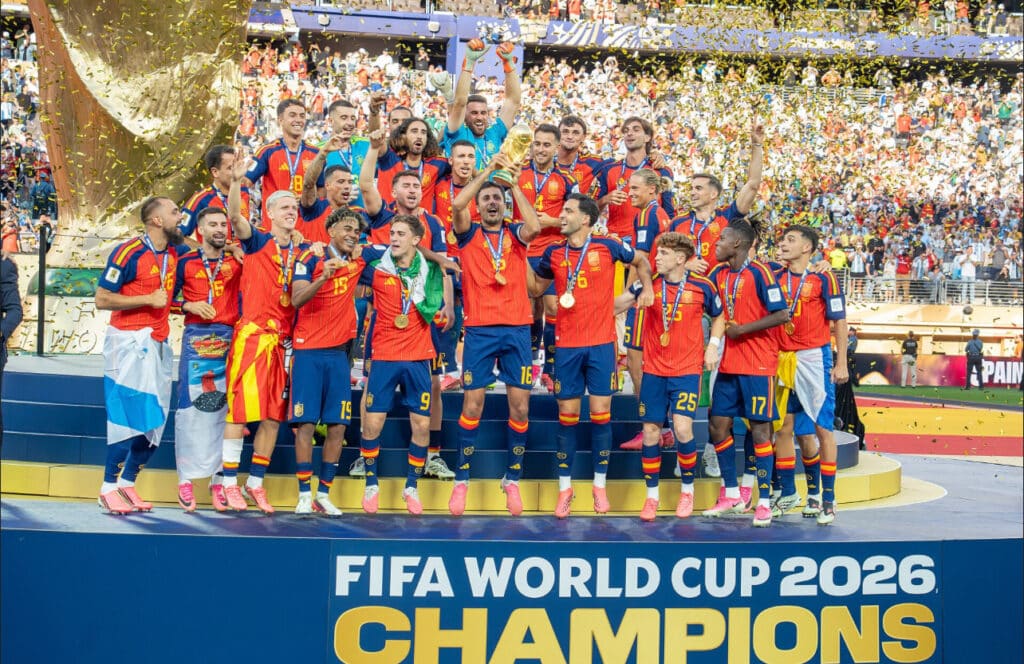
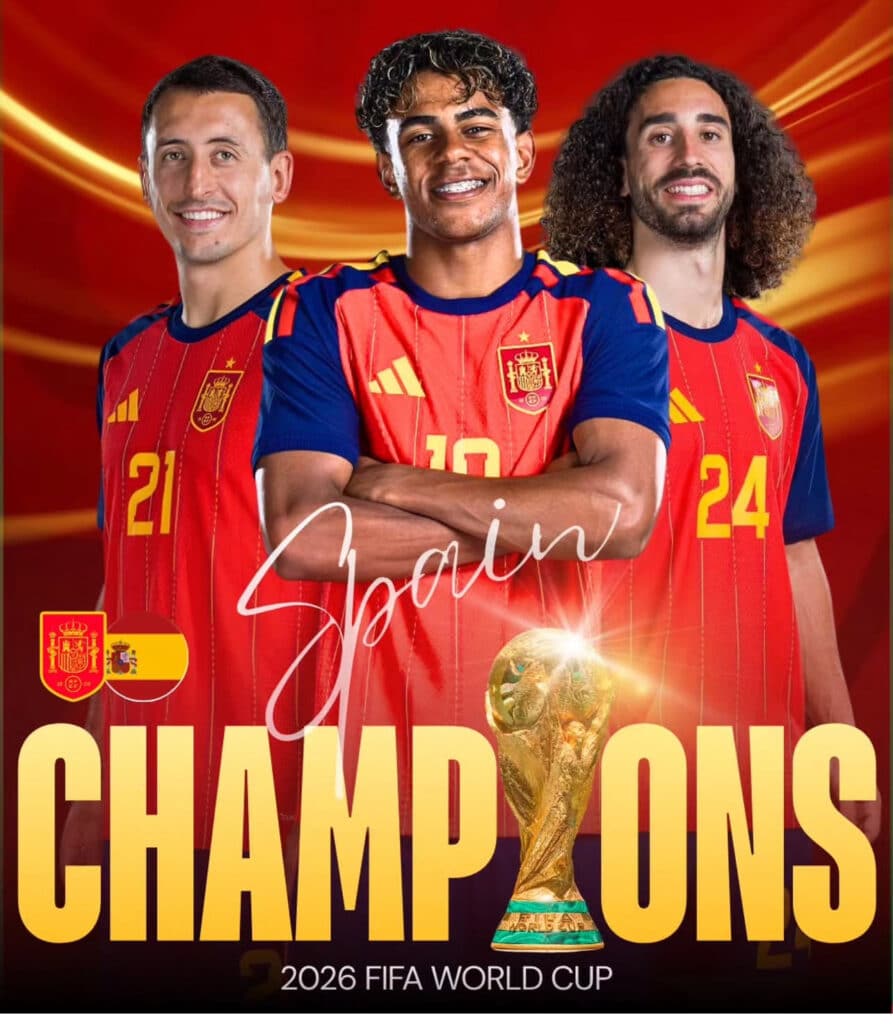
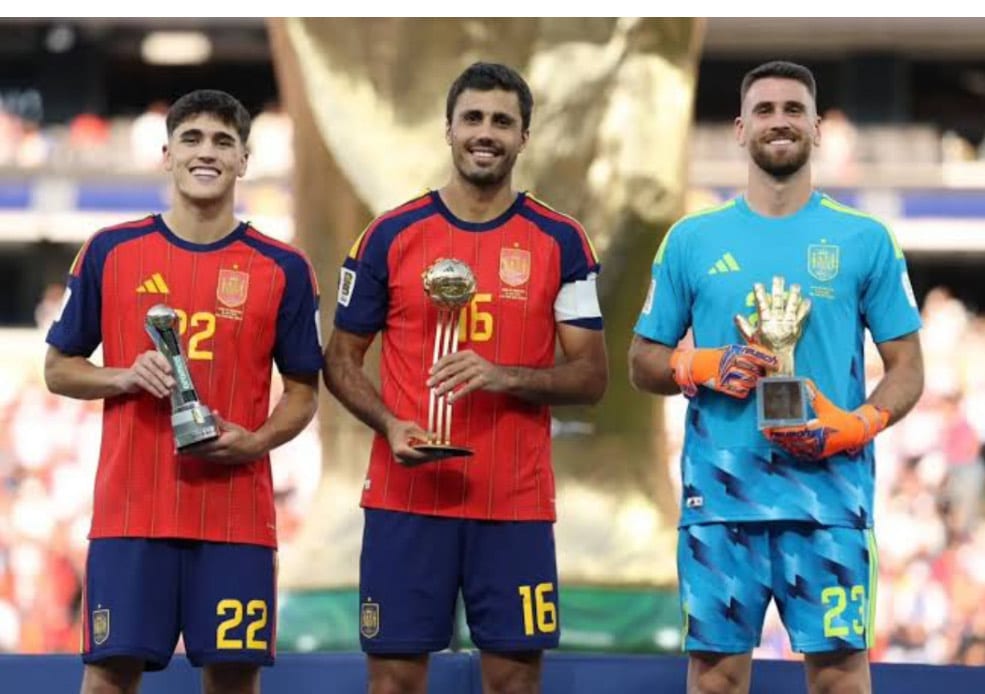
The final scene of the 2026 World Cup was more than a celebration of a new champion; it marked the end of a long footballing journey whose chapters were written on the pitches before being preserved in fans’ memories. With the final whistle, the trophy rose into the hands of Spain’s players, adding a new chapter to the story of a team that returned to the top believing football is not merely a race to the goal but a full philosophy of thinking and playing.For weeks the world moved to a different rhythm. Cities paused for match times, public squares swelled with supporters, and cafés and homes became mini-stands. A small football painted on millions of faces expressed mixed emotions—joy and regret, dream and anticipation.In the end, Spain had the final word.This triumph was not the result of a single game but the fruit of a football project that rebuilt the national team on clear principles: possession, tactical discipline, and the belief that championships are not decided by stars alone but by a team that knows when to attack, when to be patient, and when to impose itself on the opponent.Throughout the tournament Spain presented the image of a side that did not depend on one player but on an integrated system in which collective play trumped individuality and commitment overcame recklessness. It seemed as if every pass carried a message and every off-the-ball movement was part of a larger picture visible only to those who understand the game’s finer details.But, as always, the World Cup was not merely a competition to decide the best team; it was a mirror reflecting another side of the world.The event watched by billions confirmed once again that football has become the largest sporting industry on earth, where sport intertwines with the economy, media with politics, and national identity with soft power.Behind every match there was an unceasing movement: transport companies, broadcast rights, sponsors, digital platforms, sports manufacturers, tourism, hotels, and restaurants—all part of a tournament that extends beyond the green rectangle.For this reason, winning the Cup is no longer only a sporting victory but a success with economic, cultural, and media dimensions whose effects reach beyond the final curtain.At the same time, major teams exited carrying the disappointment of elimination, yet they left lessons that underscore how history grants no one permanent privilege. Yesterday’s glories are not enough to win on today’s pitches, where balances of power shift quickly and continuous work matters more than shining names.As for the fans, they remained the constant hero of every World Cup edition. They gave the tournament its true pulse, turning victories into national celebrations and defeats into stories passed down through generations. Between the stands and phone screens, the modern supporter proved no longer to be a passive consumer of the event but a co-creator—analyzing, debating, criticizing, and crafting their own narrative for every match.With the curtain drawn on the 2026 World Cup, one unchanging truth remains: football is not just a game of eleven against eleven but a space where dreams meet interests, passion meets reason, and history meets the future.Spain’s victory will be remembered by history as a well-deserved sporting achievement, but the tournament as a whole will stand as proof that football still possesses an extraordinary ability to bring the world together around a single story, despite differences in language, culture, and borders.So when Spain lifted the World Cup, they were not celebrating alone. Football itself celebrated—the triumph of a game that, despite all the money, politics, and influence surrounding it, can still stop the world for ninety minutes and leave people talking about it for years.