












Reading in English | Read in العربية (Arabic)
Cairo – Dr. Mohamed Mokhtar Abu Diab
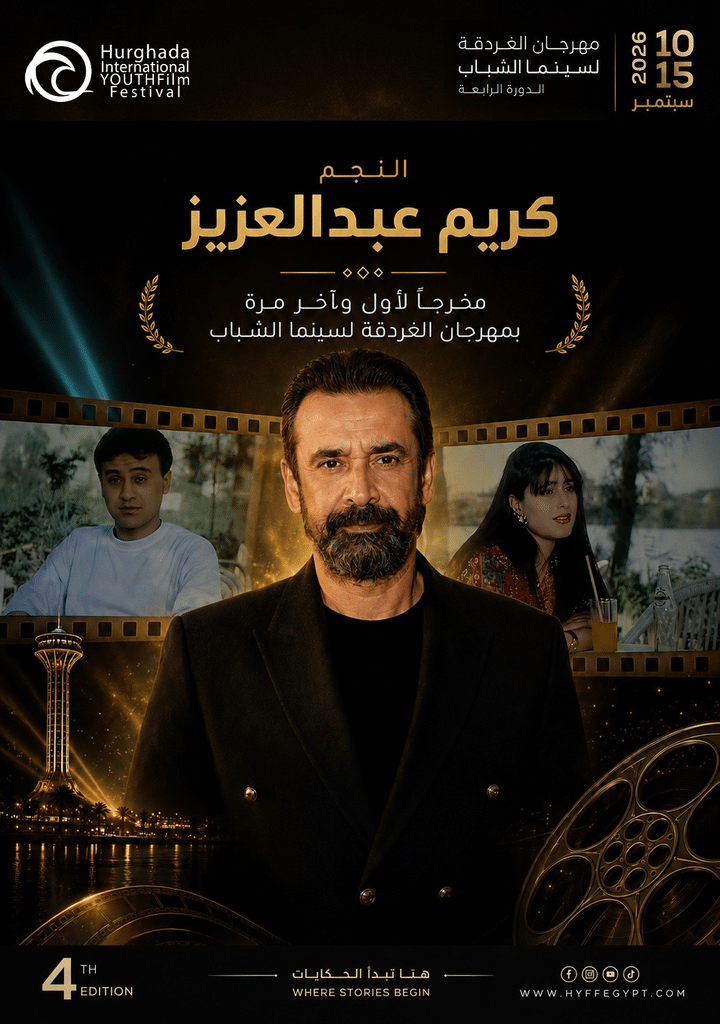
The Hurghada Youth Film Festival, in its fourth edition (10–15 September 2026), continues its inclusive program of screening graduation projects by established directors and artists. The initiative aims to build bridges and foster knowledge exchange between different generations of creatives—from graduates of film institutes and academies to current students.
As part of this program, the festival will screen two films directed by star Karim Abdel Aziz, who graduated from the Directing Department of the Higher Institute of Cinema in 1997.
The first film, “Al-Thuqb Al-Aali” (The High Hole), stars Sayed Abdel Karim and Alaa Khamis; the story is by Mohamed Abdelrahman with a screenplay by Tamer Habib.
The second film, which is a graduation project, is titled “A Painting of Flesh.” It features Ihab Fahmy, Mirna Waleed, and Saudi actor Khalid Al-Harbi. The screenplay is by Ali Shawqi and the film is directed by Karim Abdel Aziz. The film explores the problems young people face when confronting the future, the competition of life’s “auction,” and the challenges that lie ahead.
The festival will also screen “Long Live Justice,” a graduation project by director Ashraf Fayek. The story follows an elderly man who is involved in an accident on the road; no one stops to help except journalist Athar Al-Hakim, who takes him to the hospital and later faces many difficulties until she is prosecuted. The film stars Athar Al-Hakim, Ahmed Badir, Mohamed Henedy, Mohamed Tawfik, Mufid Ashour, and Ashraf Tolba.
Screenwriter Mohamed El-Bassousi, the festival president, said the program of graduation projects by senior directors and artists has been a distinctive feature of the Hurghada Festival since its first edition. Its goal is to exchange experiences among students of different generations while introducing new generations to the circumstances and atmosphere that shaped their predecessors.
Journalist Qadri Al-Hagar, the festival director, described the program as one of the most important the festival insists on maintaining, because it offers a genuine opportunity for new generations to see the artistic beginnings of directors and performers who are now among the leading names in the film industry. He added that viewing these early works gives students and young filmmakers motivation to learn from past experiences and underscores that every major cinematic career began with a first step—a graduation project that carried a dream and an ambition. The festival seeks through this program to create a space for intergenerational dialogue, linking the past with the present and future in a way that serves the film movement and gives young people a chance to learn about significant works that helped shape the history of Egyptian cinema.
Film critic Jehan Abdel Latif Badr, the festival’s artistic director, noted that the program is organized annually in cooperation with the Higher Institute of Cinema. She pointed out that the program has enjoyed great success in previous editions, with screenings frequently selling out—both among students and cinema-loving audiences.