Reading in English | Read in العربية (Arabic)
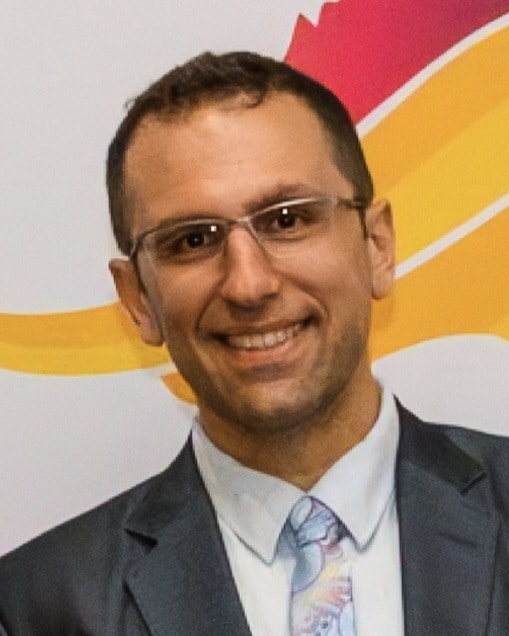
Parramatta councillor Tanya Raffoul has resigned from the Liberal Party in a significant political break that brings together several increasingly difficult issues for the NSW Liberals: the party’s direction, its relationship with multicultural communities, internal factional politics and the fallout from the Independent Commission Against Corruption’s Operation Rosny inquiry.
Raffoul announced her resignation on Monday, 28 September, just hours before Parramatta City Council was due to elect its Lord Mayor. She will continue serving the Dundas Ward as an independent.
While the timing immediately attracted attention because of the closely contested mayoral vote, Raffoul has rejected suggestions that the move was simply connected with the Lord Mayoral position.
A closer examination of Raffoul’s political history suggests her departure cannot easily be understood as a dispute that emerged overnight.
The One Nation question
One of Raffoul’s clearest stated reasons was what she described as the Liberal Party’s increasing policy and values alignment with One Nation.
“The Liberal Party’s growing policy and values alignment with a divisive political party, and its willingness to marginalise multicultural Australians, particularly across western Sydney, is disappointing,” Raffoul said in announcing her decision.
The comments came amid renewed discussion about the relationship between the Coalition and One Nation, including suggestions of potential political cooperation in the event of a hung parliament.
For Raffoul, the issue carries particular significance.
The daughter of migrant parents, Raffoul has spoken extensively about her connection with western Sydney and its culturally diverse communities. She was elected to represent Dundas Ward at the September 2024 local government election.
Her specific reference to multicultural Australians therefore places representation and the Liberal Party’s relationship with culturally diverse communities at the centre of her explanation for leaving.
Operation Rosny and Liberal Party culture
The second major factor identified by Raffoul is the ongoing ICAC investigation known as Operation Rosny.
“The recent public inquiry has also raised very serious questions about the Liberal Party’s culture and the weight given to merit and a genuine commitment to public service,” she said.
Operation Rosny is investigating allegations involving people associated with the NSW Liberal Party, property developer Jean Nassif and others.
Among the matters being examined are allegations that political donations, including donations from prohibited donors, were used to recruit or renew Liberal Party members and that schemes may have been used to circumvent NSW electoral funding laws.
ICAC is also investigating whether donations allegedly made by or on behalf of Nassif and Toplace were connected with attempts to damage the political career of former Liberal minister David Elliott and remove former NSW Building Commissioner David Chandler from office.
Importantly, these remain allegations being investigated by ICAC. The existence of the inquiry should not be interpreted as a finding of corrupt conduct against everyone named or discussed during its hearings.
For Raffoul, however, Operation Rosny is unusually personal.
Before entering local government, she served as chief of staff to David Elliott.
Evidence presented during the inquiry has included allegations that Raffoul herself was pressured while working for Elliott. Elliott told ICAC that Raffoul received a threatening approach seeking information about him. The inquiry has also heard allegations about a wider campaign intended to damage Elliott politically.
That history provides important context to Raffoul’s statement about party culture. She was not merely observing Operation Rosny from outside the events under examination; she had worked closely with one of the political figures allegedly targeted.
Concerns about Liberal Party culture predate ICAC
Perhaps the strongest indication that Raffoul’s concerns are longstanding comes from events four years earlier.
In December 2022, while seeking Liberal preselection for Parramatta, Raffoul publicly alleged that people within the party had strongly discouraged her from running.
She said she had been advised to “settle down and have children” before pursuing a parliamentary career. She also said she had been described within Liberal circles as “too assertive” and “too opinionated”.
The comments prompted criticism from senior Liberals.
Then minister David Elliott said the remarks reflected bias against women within the party, while then treasurer Matt Kean described the reported comments as unacceptable and said they had no place in the Liberal Party or any organisation.
Viewed alongside Raffoul’s resignation statement in 2026, those events are significant.
Her present concern about “the weight given to merit” inside the Liberal Party closely echoes an issue she had already raised publicly years before the current ICAC inquiry.
A party moving to the right?
Operation Rosny has also exposed a deeper ideological struggle inside the NSW Liberal Party.
ICAC has heard evidence about a network known as the “Reformers”, whose members sought to recruit conservative Christians into Liberal branches and increase their influence over the NSW division.
Evidence and reporting surrounding the group have raised broader questions about factional efforts to influence the ideological direction and internal composition of the party.
This does not establish that Raffoul’s resignation was directly caused by the Reformers, nor has she publicly framed her departure in those terms.
However, it provides context for her stated concerns about the Liberal Party’s direction, culture and emphasis on merit.
Her criticism of perceived alignment with One Nation and her concerns arising from Operation Rosny therefore intersect around a broader question: what kind of political organisation does Raffoul believe the Liberal Party is becoming, particularly in culturally diverse western Sydney?
The timing cannot be ignored
There is nevertheless a political dimension to the timing.
Before Raffoul’s departure, Parramatta Council consisted of six Liberal councillors, six Labor councillors, one Greens councillor and two independents. Her move from the Liberal Party changes those numbers and increases the importance of independents in determining council leadership and other closely contested decisions.
Her resignation occurring on the same day as the Lord Mayoral vote inevitably invites scrutiny.
But timing alone does not establish motivation.
The publicly documented history stretches back considerably further: Raffoul complained about her treatment during Liberal preselection in 2022; she subsequently became directly connected to matters discussed during Operation Rosny through her former role with Elliott; and she has now publicly objected to what she sees as the party’s approach towards multicultural Australians and its political direction.
More than a local council dispute
Raffoul’s departure is therefore significant beyond Parramatta City Council.
She is a former senior Liberal staffer, a councillor elected under the Liberal banner and someone whose political future appeared potentially to extend beyond local government. She had also recently been publicly identified as a possible contender for Liberal preselection for the state seat of Winston Hills following MP Mark Taylor’s decision not to contest the 2027 NSW election.
Walking away from the party effectively changes that trajectory.
Based on Raffoul’s own statements and her documented history, three themes emerge from her decision: opposition to what she sees as increasing Liberal alignment with One Nation; concern that multicultural communities, particularly in western Sydney, are being marginalised; and longstanding questions about internal Liberal Party culture, merit and factional influence that have been amplified by Operation Rosny.
Whether other Liberal members share Raffoul’s assessment is a separate question, and the findings of Operation Rosny remain to be determined by ICAC.
But her resignation demonstrates that the consequences of the inquiry — and the debate over the Liberal Party’s political direction — are no longer confined to evidence being heard inside an ICAC hearing room.
They are now producing consequences inside the party itself.