

Arabic version: إغلاق مصايد الكركند الصخري في تسمانيا بسبب مخاطر تجارية مرتبطة بالمضادات الحيوية
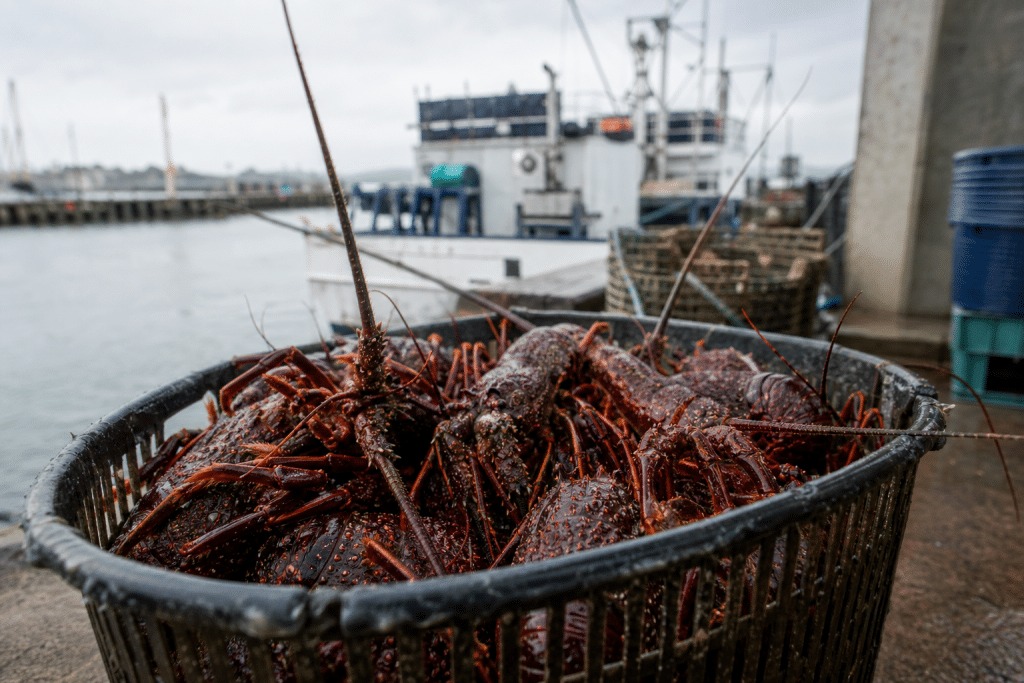
According to ABC News, commercial rock lobster and dive fisheries in parts of Tasmania’s south-east will close for three months to mitigate international trade risks associated with antibiotic use at nearby salmon farms.
The Department of Natural Resources and Environment has issued notices closing specified commercial areas from November 15 to February 14. Commercial rock lobster fishing and pot setting will be prohibited in parts of the Southern Channel Therapeutic Management Area, while divers cannot take short-spined sea urchins, long-spined sea urchins or periwinkles in the Northern Channel area.
The closures follow Tassal’s use of oxytetracycline at salmon farms at Great Taylors Bay and Meads Creek in the lower D’Entrecasteaux Channel. Under Tasmania’s Wild Fisheries Market Access Plan, wild fisheries near salmon pens treated with antibiotics may be temporarily closed to prevent antibiotic detections in seafood that could prompt export bans in countries with zero tolerance.
Tassal said the localised closure was a precaution covering an area representing about 1.6 per cent of Tasmania’s annual historical rock lobster catch. The company said it administered the antibiotic by injection, not through medicated food, and that monitoring was underway to support reopening as soon as possible.
Salmon Tasmania has separately sought an emergency permit to use florfenicol to treat bacterial disease. The Australian Pesticides and Veterinary Medicines Authority is seeking public submissions, with a decision expected this month. An earlier emergency permit was revoked in March after florfenicol was detected in wild seafood more than 10 kilometres away.