











Arabic version: تسمانيا تبدأ تطعيم الببغاوات مع انتشار إصابات إنفلونزا الطيور H5
According to ABC News, Tasmania has begun vaccinating captive orange-bellied parrots against H5 bird flu as new detections extend the virus’s presence across the state. The Department of Natural Resources and Environment Tasmania recorded the virus in a tern at Acton Park, outside Hobart, a forest raven at Triabunna on the east coast, and another tern at Marrawah in the north-west.
The new reports took Tasmania’s total detected cases to 54 since the virus was first found last month. The Triabunna detection was the first recorded case in a forest raven. Incident controller Wes Ford said the department would no longer report individual cases, instead concentrating on locations where the virus was being detected, saying this better reflected the situation.
Mr Ford urged residents to continue reporting sick and dead birds, saying public reports had been crucial to identifying positive detections and informing surveillance. He said Tasmania had not recorded mass mortality events and there had been no detections in the state’s poultry industry. Chicken and eggs remained safe to eat, while the risk of H5 bird flu to people in Tasmania was low, he said.
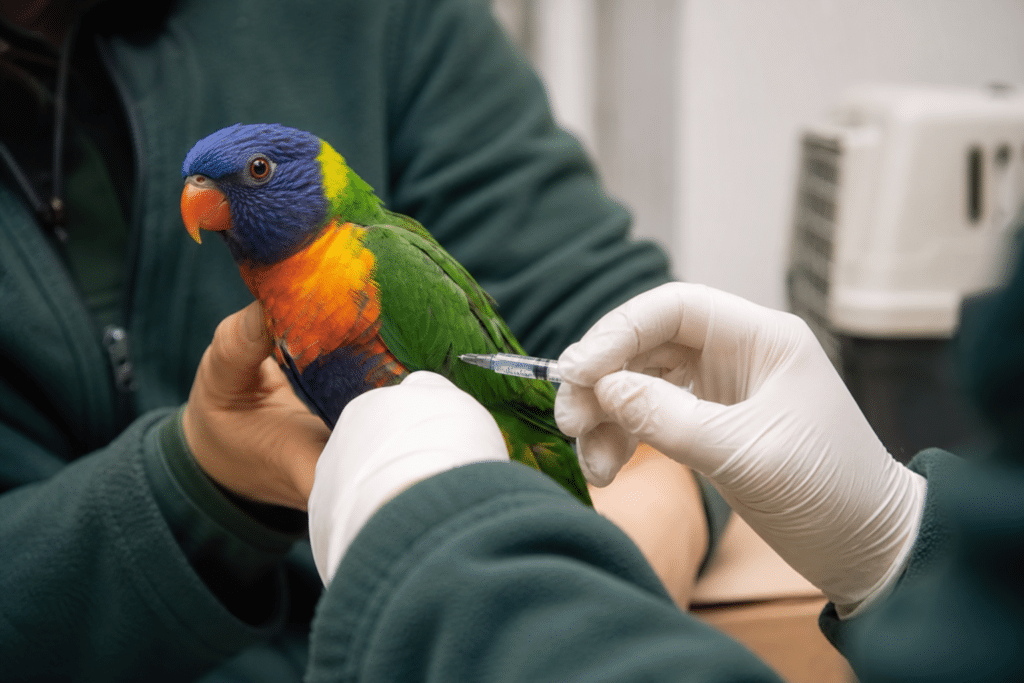
The vaccination program targets the critically endangered orange-bellied parrot, whose wild population was recently estimated at fewer than 100 birds. About 350 captive birds are expected to receive two vaccinations each between now and February before being sent to Melaleuca in Tasmania’s remote south-west to join the wild population. Environment Minister Guy Barnett said the H5 virus “absolutely threatens” the species’ existence.
Up to 50 parrots were due to be vaccinated in Tasmania on Tuesday and monitored closely for adverse effects, including impacts on fertility. Environment department secretary Jason Jacobi said the resulting information would help determine the safety of vaccinating the remaining birds. Mr Ford advised people to avoid sick or dead birds and contaminated material, and to report sick, dying or dead birds through the Emergency Animal Disease Hotline on 1800 675 888.