











Arabic version: رجل من تكساس يواجه الإعدام مرتبطًا بكلمات أغاني الهيب هوب الخاصة به
According to The Guardian,
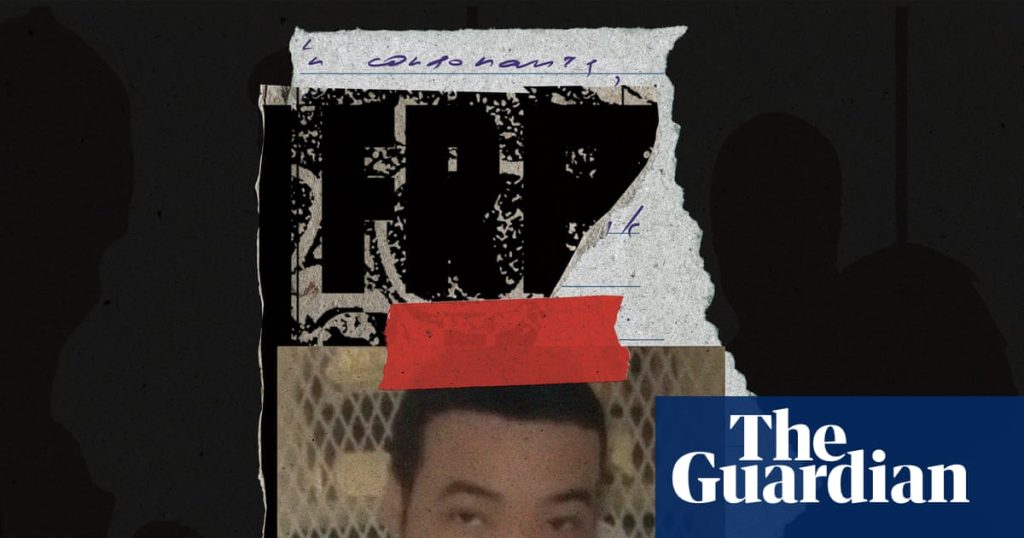
James Broadnax has been locked up in a 6ft-by-10ft cell on death row in Texas for more than 16 years, and in that time he has developed coping mechanisms for passing the long and desolate days. A favourite technique is to write spoken word poetry at his cell desk. He becomes so engrossed in the creative process that he can lose himself for hours, transfixed in what he calls a “time gap”. In one of his recent poems, featured in a short death row documentary, Solitary Minds, Broadnax, who is 37, describes how he writes:
“I’ve been here umpteen days never forgetting
To forget the absence of my fate.
Sloppy ciphered sentences become rage,
Provoking thoughts into words spoken
Across this blank page.”
Though his love of writing has remained constant, the form of Broadnax’s poetry has changed over the years. Today it is spoken word, but as a teenager back in the aughts it was rap. Broadnax’s dream was to become a successful rapper. He would fill entire notebooks with handwritten rap lyrics. Next month, that old habit could cost him his life.
Broadnax is set to enter the execution chamber in Huntsville, Texas, on 30 April. He will be strapped to a gurney and injected with a lethal dose of pentobarbital – his life snuffed out in no small part because of the prosecutorial use, or misuse, of his poetry. In 2009, Broadnax, who is African American, was convicted along with his cousin of murdering two white men, Matthew Butler and Stephen Swan, during a robbery in Garland, Texas. He was found guilty by a jury from which Dallas county prosecutors had initially excluded all Black jurors, until the trial judge stepped in and reinstated one of them.
During the sentencing phase of Broadnax’s capital trial, prosecutors presented the jury with 40 pages of the defendant’s notebooks found in a suitcase after his arrest. The state carefully selected rap lyrics infused with violent images of murder, robbery and drugs, to make the case that Broadnax should be sentenced to death. Its lawyers skirted over lyrics addressing peaceful narratives such as redemption and love. For the ultimate punishment to be secured under Texas law, jurors would have to be persuaded that the defendant posed a threat of “future dangerousness”.
Those lyrics were among several read out in court from his notebooks as critical evidence, prosecutors claimed, of Broadnax’s “gang mentality”. In closing arguments, the state said that his “gangsta rap” writings proved just that – that he was a member of a criminal gang and a “psychopathic killer” whose lyrics were a literal homicidal master plan. By leaning heavily on rap lyrics and racist dog whistles, Texas prosecutors managed to drown out mitigating evidence that might have spared Broadnax’s life. His defense lawyers emphasised that Broadnax was just 19 when the murders took place. He had endured an abusive childhood at the hands of a grandmother who locked him up in his room without food and frequently beat him. And despite such a traumatic background, he had no previous criminal record other than a single conviction for non-violent marijuana possession.
The jury was clearly less swayed by such details than by the prosecutors’ lurid invocation of the rap lyrics. Jurors asked to see the notebooks twice during their deliberations. Then they sent Broadnax to death row.
Kevin Liles is a luminary of the rap world with a storied 40-year career. He rose from intern to become president of the ultimate hip-hop label, Def Jam Recordings. Until last year, Liles was CEO of the record label 300 Entertainment, whose roster has included Megan Thee Stallion, Mary J Blige and Young Thug. For the past three years Liles has redirected his energies from recording artists to protecting them from the criminal justice system. He leads a non-profit, Free Our Art, whose mission is to shield artists from what he sees as gross infringements of their first amendment rights to free expression.
For Liles this is personal. In 2022, 300 Entertainment was distributing Young Thug (real name Jeffery Williams) and his record label, YSL Records, when the rapper was arrested on racketeering charges relating to alleged membership in a criminal street gang and other crimes. The following year the trial judge ruled that Young Thug’s lyrics and music videos could be admitted in evidence. It later transpired that many of the lyrics cited by prosecutors had not even been written or uttered by the rapper.
When he heard about the impending execution of Broadnax in Texas, similarly involving rap lyrics presented as supposed evidence, it drove his mission to a new, vastly more urgent level. “I haven’t seen anything so egregious in this space,” Liles said. “A young man sentenced to death based not on evidence, but on allegations that he was a ‘future threat’ because of his rap lyrics. If the supreme court does not intervene, we’re actually going to put a kid to death based on his lyrics.”
Getting the supreme court to intervene to stop Broadnax’s execution is now Liles’s top priority. The condemned man’s lawyers have filed a petition to the nine justices of the court arguing that Texas’s use of Broadnax’s lyrics was a violation of due process and equal protection enshrined in the eighth and 14th amendments of the US constitution. To support that appeal, Liles helped assemble a group of 16 prominent creative artists that included Young Thug himself and other top rappers such as Killer Mike, T.I. and Fat Joe, as well as the Black-ish actor Anthony Anderson. Working alongside a slew of art organisations and academic experts, the artists joined what is known as an amicus brief lending their voices to the petition now before the supreme court. In the supporting brief they quote lyrics written and performed by artists in other musical genres that have been treated as works of imagination and entertainment without attracting the gaze of prosecutors.
As Broadnax’s execution date approaches, advocates are calling for judicial intervention to prevent what they view as an egregious misuse of artistic expression in a capital case.