












Reading in English | Read in العربية (Arabic)
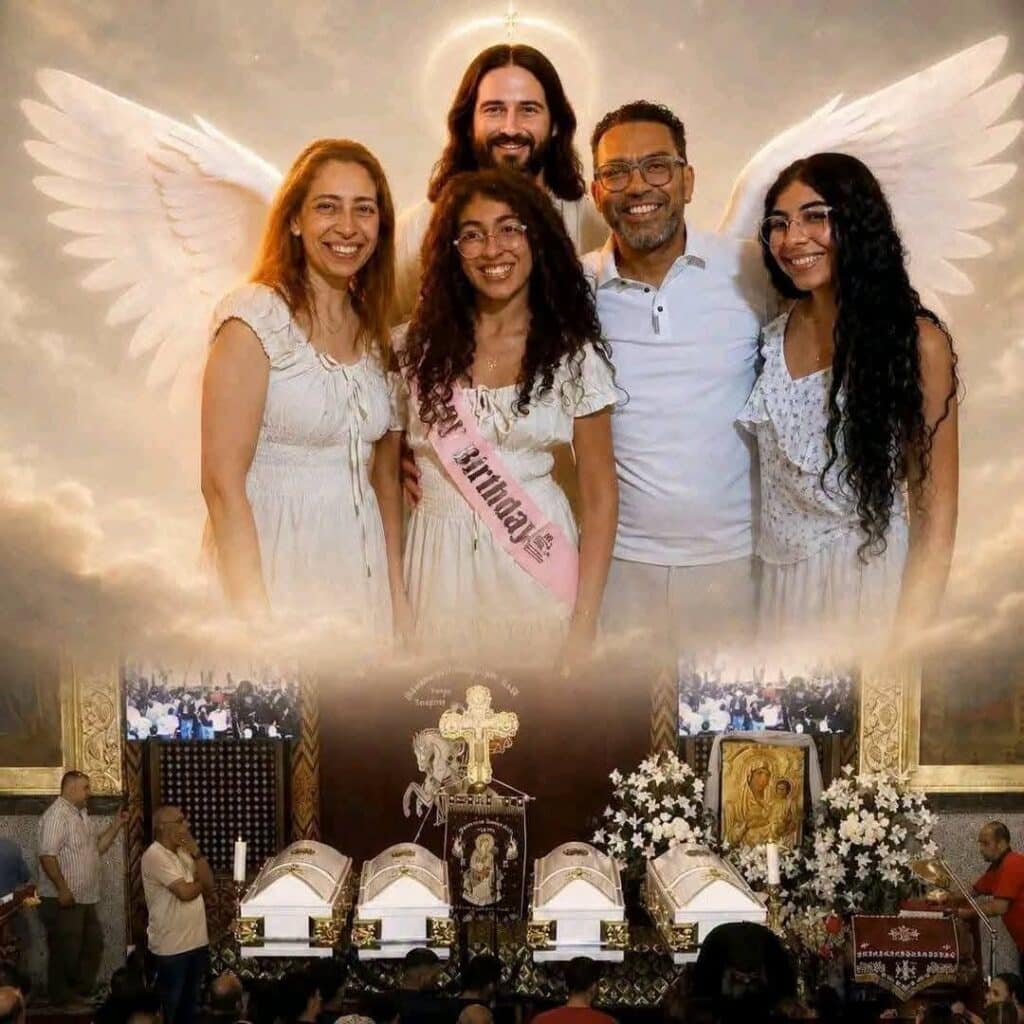
The massacre in Cairo’s Fifth Settlement over the past few days has shaken Egyptian public opinion: an entire family—a husband, his wife and their daughter—were murdered in a premeditated, meticulously planned crime. The killer pretended to be a close, trusted friend of the male victim to lure him into his car, then shot him and dumped his body behind a concrete barrier on the Ain Sokhna road. He then went to the victim’s wife’s home after stealing some of the victim’s belongings, lured her and her two daughters into her car by claiming the husband had been taken to a hospital after a traffic accident, and then betrayed them, opening fire and killing them. The killer later moved the car containing the victims’ bodies near their residence and covered them.
There is no doubt that this massacre was driven by a goal to rob the victim’s home, rooted in the harsh economic realities: high unemployment, rising living costs, and increasing poverty affecting most of the Egyptian population, including the killer himself. Those conditions feed resentment across social classes, breeding hatred and contributing to rising rates of crime—fraud, theft, murder—sometimes even between people who once trusted each other, as this case tragically demonstrates.
Investigations have released the names of the Christian family victims and the killer, while various accounts circulate about the relationship between the killer and the deceased and the motives behind the bloody crime. Questions quickly turned to the killer’s full name as people sought to determine his religion, and some commentators immediately raised his mental health—apparently to clear him or to imply an Islamist motive—following a pattern seen in earlier attacks on Christians. Yet the killer executed the crime with a diabolical plan unlike anything ordinary: it was the work of a professional who staged deception to mislead justice, chose the right weapon and locations, and concealed the victims’ bodies.
This bitter reality finds Egyptians between the hammer of religious frenzy and the anvil of inciting Salafi takfiri fatwas, all against the backdrop of an economic catastrophe that has pushed much of the population to the brink. That crisis risks turning large groups of devout but unemployed and impoverished youth into highly dangerous criminal gangs. Some may exploit certain Salafi fatwas pronounced by preachers such as Sheikh Abu Ishaq al-Huwaini and his son Hatem—which labeled Christians as unbelievers and effectively made their possessions liable—to carry out robberies, killings, and armed attacks on homes and businesses owned by Christians, especially jewelry shops.
The Fifth Settlement crime will not be the last; it should serve as a warning to every Egyptian. Anyone can become a target of the resentful, so people must be cautious even about those they trust most, keeping their private matters to themselves in a time when the country seems to have lost both humanity and safety.