












Reading in English | Read in العربية (Arabic)
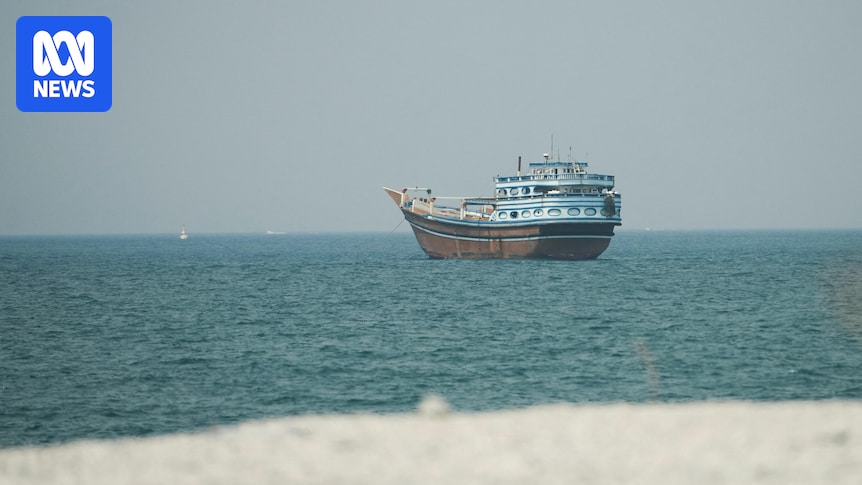
The renewed escalation between the United States and Iran has pushed the Strait of Hormuz back to the forefront of events in the Arabian Gulf, underscoring its central role in the global trade system, especially in oil and gas. The strait is one of the world’s most important maritime passages, with about one-fifth of global oil and gas exports transiting it. This escalation follows the Islamic Revolutionary Guard Corps’ announcement that it would close the strait entirely and prevent ships from passing until further notice, and the U.S. blockade of Iranian ports and vessels—measures that compound pressures on oil and gas supplies and on global trade flows.
The need for stable security arrangements
Events since the memorandum of understanding between Tehran and Washington show that escalation in the Strait of Hormuz has not subsided; the strait has become a pressure point and testing ground between Washington and Tehran. The situation indicates that the ceasefire has so far failed to establish stable navigation rules. Despite a meeting in Muscat between the foreign ministers of Iran and Oman to discuss technical details, Iran targeted the Omani route used by dozens of cargo ships and tankers.
By channeling part of traffic onto Iranian routes under the pressure of threats to the Omani passage, shipping companies face a difficult choice: publicly display their route and risk being targeted; hide their signals and risk losing transparency and insurance coverage; or refrain from transiting, which would slow transport, cause ship congestion, and delay deliveries. This reality calls for permanent security arrangements without delay.
Disruption extending across sectors
Closure of the Strait of Hormuz disrupts supply chains beyond crude oil and liquefied natural gas; its effects reach broad industrial and commercial sectors. Energy is involved at every stage of production, transport, and storage, so shortages or price increases directly raise the costs of shipping, goods, and services.
Delays in shipping can also interrupt production lines—especially in sectors like automobiles, electronics, and chemicals that rely on sequential production and typically carry limited raw-material inventories. Markets may face shortages or price rises in petrochemicals, plastics, industrial materials, and agricultural fertilizers tied to oil and gas.
Rising costs and slower transport
A direct consequence of renewed escalation is higher maritime shipping risk, prompting insurers to raise premiums—particularly war-risk insurance—on vessels and tankers transiting tense areas. Freight rates for oil and gas carriers increase, and operational costs grow because of the extra time vessels need to reach destinations, voyage expenses, and ship-protection measures.
These risks may lead some shipping firms to hesitate before entering the strait, reduce the number of sailings, or wait for additional security arrangements, resulting in slower transport, vessel congestion, and delayed cargo arrivals. Even an increased risk level alone is enough to raise the cost of global trade, a burden ultimately borne by end consumers worldwide.
Asia is most exposed to pressure
Asian countries are among the most affected by any disruption in the Strait of Hormuz, given the heavy dependence of major economies—such as China, India, Japan, and South Korea—on energy imports from the Gulf. Such disruptions raise energy and industrial production costs in these countries.
Qatar National Bank (QNB) expects the military escalation between the United States and Iran to continue affecting Asian economies even after any agreement to end the crisis, noting that full recovery depends on restoring supply chains, replenishing energy reserves, and stabilizing prices.
In its weekly report, the bank explained that Asia is the most harmed due to its large reliance on energy imports via Hormuz, which has led governments to take exceptional measures such as tapping strategic reserves, rationing fuel consumption, and restarting coal-fired power plants.
Alternative export routes
The renewed tension in the Strait of Hormuz makes it imperative to diversify energy export routes and avoid dependence on a single maritime corridor, no matter how important. Pipelines that bypass the strait become increasingly important—such as Saudi Arabia’s East–West pipeline, which carries oil to Red Sea ports; Abu Dhabi’s pipeline to Fujairah outside the strait; and Egypt’s SUMED pipeline from the Red Sea to Sidi Kerir on the Mediterranean. However, the capacity of these lines remains limited compared with the volume that transits Hormuz.
According to Reuters, citing several informed sources, Saudi Arabia is studying increasing the capacity of its crude oil pipeline to the Red Sea coast. Such a step could allow the kingdom—and possibly some neighboring Gulf states—to export larger volumes, potentially up to two million barrels per day, without transiting the Strait of Hormuz. The United Arab Emirates is also working to increase the capacity of its pipeline to Fujairah to strengthen its ability to export oil away from the strait.
This situation highlights the importance of reviving overland pipeline projects that bypass the Gulf for transporting oil or gas, notably the proposed Qatari gas pipeline to Turkey and Europe via Syria, and the Iran–Iraq–Syria gas line known as the “Islamic Friendship” pipeline.
It also underlines the value of reopening the Kirkuk–Tripoli and Kirkuk–Baniyas pipelines, which could provide additional outlets for Iraqi oil to the Mediterranean and give Iraq broader export options, reducing its dependence on the Turkish route and traditional maritime channels. For Lebanon, reactivating the Kirkuk–Tripoli line would represent an economic and strategic opportunity—restoring its role as an energy corridor to the Mediterranean and allowing it to benefit from transit fees, logistics services, and investments tied to rehabilitating oil infrastructure, especially the Tripoli refinery facilities.