Arabic version: توازي سرد ترامب لعام 2026 مع خطاب حرب العراق
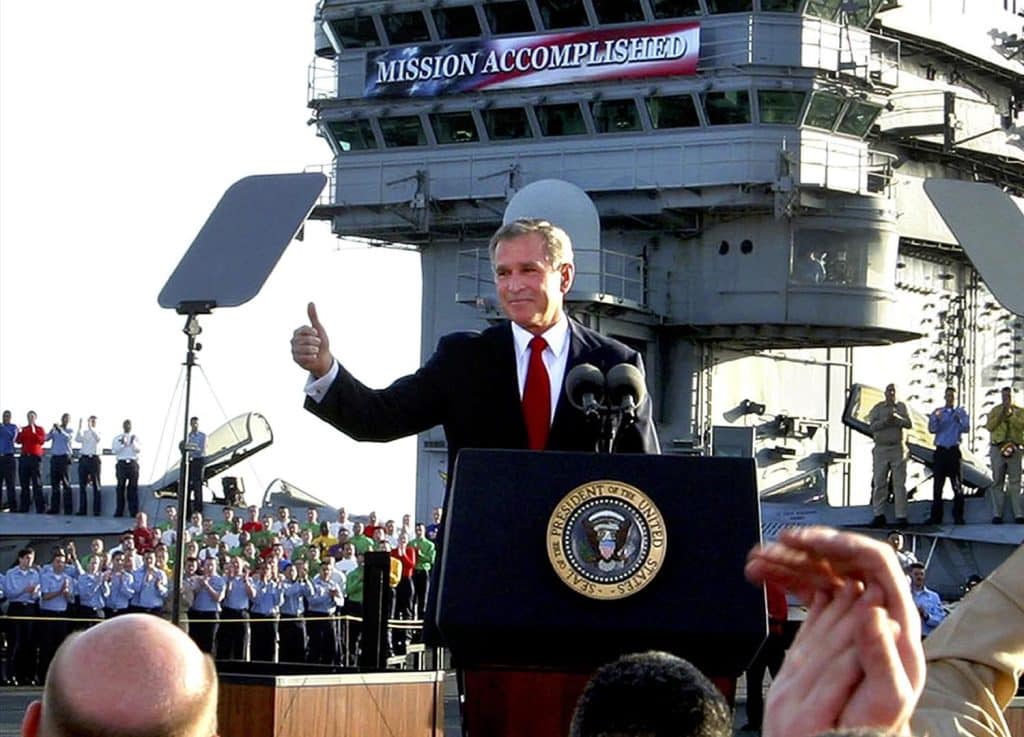
In a striking parallel to the past, President Donald Trump’s recent State of the Union address echoed the rhetoric used by former President George W. Bush in 2003. Both leaders warned of grave threats from rogue regimes, with Trump specifically targeting Iran as a looming nuclear danger. According to Al Jazeera, this narrative is reminiscent of Bush’s claims about Iraq’s weapons of mass destruction.
The geopolitical landscape, however, has shifted significantly since the early 2000s. Experts note that while Bush’s administration operated under a doctrine of preemptive strikes, Trump’s approach is being described as “preventive maintenance.” Following the June 2025 strikes on Iran in tandem with Israel’s attack in the 12-day war, questions have arisen regarding the validity of intelligence claims related to Iran’s nuclear capabilities, with conflicting statements from officials complicating the narrative.
Analysts have pointed out that the internal coherence seen in Bush’s team is lacking in Trump’s administration. While key figures like Vice President JD Vance and Defence Secretary Pete Hegseth insist the goal is not regime change, Trump himself has publicly contradicted this stance, hinting at a desire for a total overhaul of the Iranian regime. The current administration appears divided between isolationist and interventionist ideologies.
Furthermore, the U.S. is navigating its foreign policy in relative isolation compared to 2003, when a coalition led by the U.K. supported military actions in Iraq. Today, Trump is reportedly alienating allies, with only Israel fully aligned with U.S. interests in the region. The lack of a supportive coalition raises concerns about the potential for escalating conflict without international backing.
As negotiations between U.S. and Iranian officials unfold in Geneva, the future remains uncertain. The stakes are high, with fears that a miscalculation could lead to a broader conflict. The ongoing situation emphasizes the necessity for checks and balances in U.S. foreign policy, a principle that appears increasingly challenged in the current political climate.