












Arabic version: متطوعون في فيكتور هاربور يراقبون الدلافين بحثاً عن علامات إنفلونزا الطيور
According to ABC News, citizen scientists around Victor Harbor are continuing marine monitoring while watching dolphins for possible signs of bird flu. Their work follows the identification of Australia’s first local dolphin case at Goolwa Beach and a suspected case involving a sea lion at Victor Harbor.
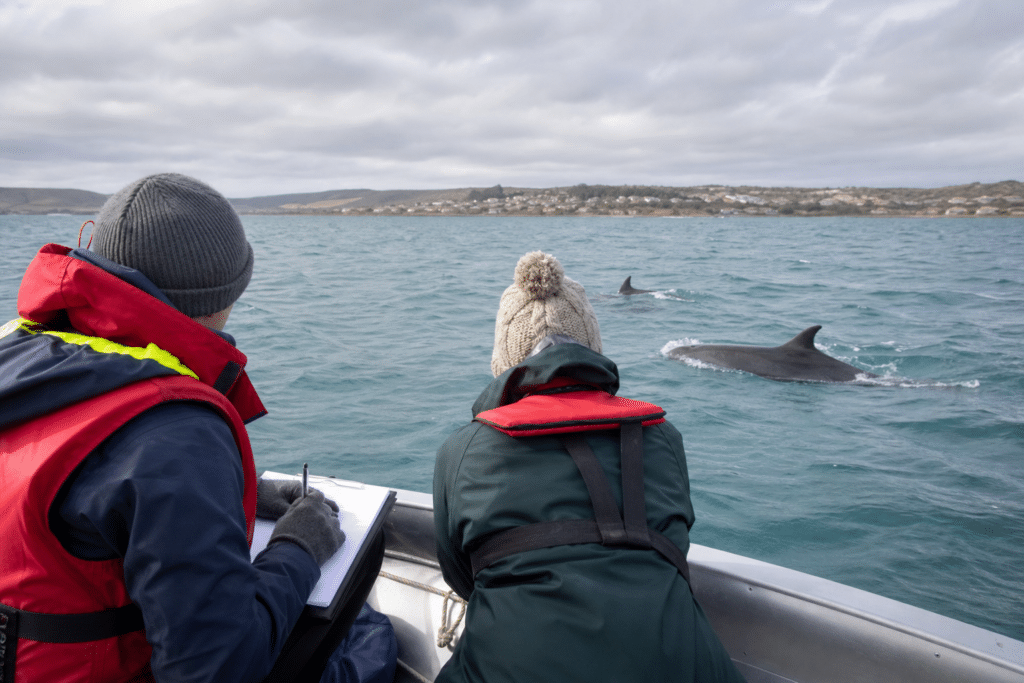
Members of the Victor Harbor Dolphin Watch Group regularly collect observations during boat trips in the Fleurieu Peninsula area. Nedra Haines, who has monitored dolphins for 14 years, has helped compile a catalogue of 140 bottlenose dolphins and 50 common dolphins using dorsal-fin shapes and markings. Information on the animals and their environment is entered into South Australia’s biological database.
The group also recorded early signs of the harmful algal bloom before it spread widely on local beaches. Haines said watchers had tracked possible skin irritation during the bloom and are now alert for behavioural or neurological changes, including unusual swimming or balance problems. Dolphins seen on the latest trip showed playful behaviour, curiosity, tail slapping and seaweed carrying, with no apparent signs of illness.
Water sampling continues alongside wildlife observation. Samantha Sea, from Phytoplankton of South Australia, processes samples to identify algae and other phytoplankton. Data from her and a statewide volunteer network are provided to researchers and government agencies. The group was named South Australian Citizen Science Champions for 2026.
Although monitors are now generally finding low levels of the Karenia species linked to the bloom, they say ongoing work is needed to establish normal conditions and follow the marine environment’s recovery. Dr Niko Streiber, whose southern Adelaide samples assisted University of Technology Sydney researcher Shauna Murray’s team in identifying toxin-producing Karenia cristata, said the species can survive as cysts on the ocean floor and could return under suitable conditions.