Arabic version: فيكتوريا تدرس نقل الطيور مع انتشار H5N1
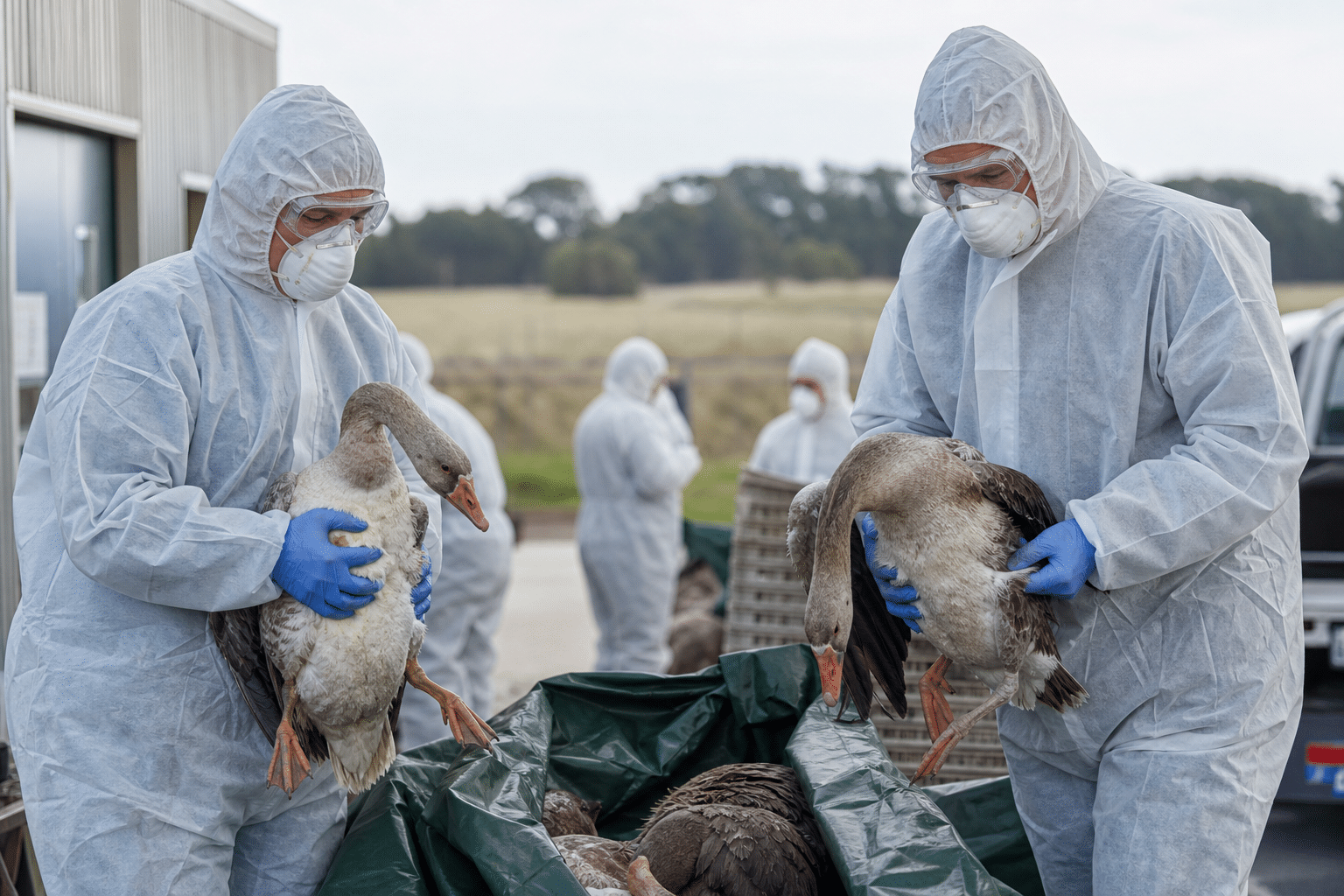
According to ABC News, the Victorian government is considering “emergency extractions” of threatened wild bird species as the H5N1 strain of avian influenza spreads through the state’s wild bird population. The move is being examined as spring breeding draws birds together at wetlands across northern Victoria.
The Department of Energy, Environment and Climate Action has identified nearly 100 bird species at risk from H5N1, including black swans and brolgas. Chief biodiversity officer James Todd said authorities were assessing direct interventions for species not already held in captivity, including the possibility of emergency extraction.
Zoos Victoria and other wildlife facilities already maintain captive populations of several threatened species, including the orange-bellied parrot, plains wanderer, regent honeyeater and helmeted honeyeater. Mr Todd said there had been no reported cases globally of a species becoming extinct because of the virus, but cautioned that overseas experience could not be directly applied to Victoria because of Australia’s unique fauna.
Brolgas are among the species of concern. Victoria has about 1,000 brolgas, mostly in the state’s south-west, while northern Victoria and southern New South Wales have an estimated population of 50. Listed as endangered in Victoria, the birds have been affected by habitat loss, agriculture, urbanisation and predation by introduced foxes.
Wetlands on private land are also central to protection efforts. Near Rushworth, farmer Adrian Weston has about eight hectares of wetland where he has seen brolgas nesting and a chick hatch this year. Volunteers from Rushworth Field and Game and local students check hen houses and nest boxes, while the group hunts foxes to keep numbers low. Weston said he was concerned about the potential impact of H5 avian influenza on wetland birds.