














Arabic version: المعلمون في فيكتوريا يغادرون بحثًا عن رواتب أعلى في نيو ساوث ويلز
Victorian public schools are underfunded and face teachers leaving the state for higher salaries. According to ABC News, many educators are opting to cross the border for higher salaries, leaving their positions in Victoria.
Jessica Sargeant, principal of Echuca College, has reported losing seven teachers to New South Wales over the last three years, primarily due to salary differences. A starting graduate public school teacher in Victoria earns $79,589 annually, which is more than $13,000 less than the $92,882 a graduate public school teacher in New South Wales gets. This pay gap, coupled with the rising cost of living, has made the decision to leave a straightforward choice for many.
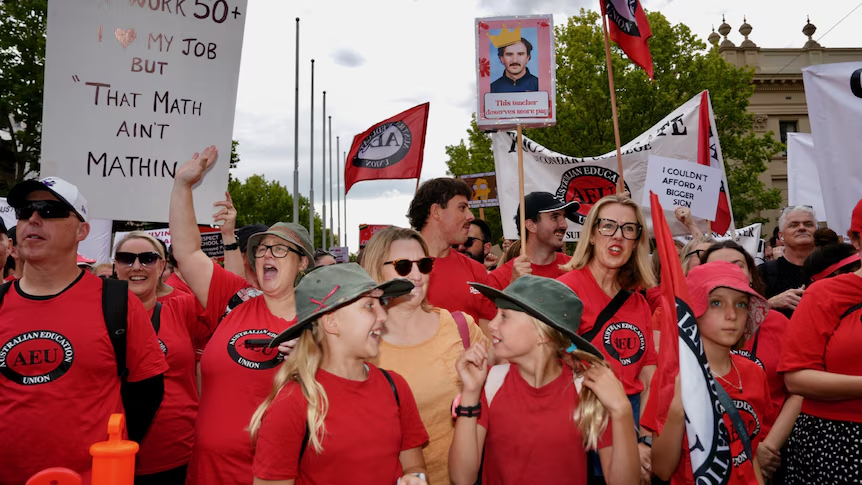
Last week, tens of thousands of public school teachers in Victoria walked off the job to demand a better pay deal from the state government. The latest offer – a 17 per cent wage increase over four years – would still leave Victorian teachers well behind their counterparts in NSW. Teacher Michael Rogers, who transitioned to a Catholic school in Albury, noted that the salary difference in a leadership role was around $30,000, making the move an easy decision for him.
Premier Jacinta Allan has defended the state’s funding levels, asserting that Victoria has seen a 34% increase in funding for government schools over the past decade. However, critics, including Professor Ian Morgan from Save Our Schools, argue that Victoria is lagging in meeting commitments under the Gonski reforms, which aim to close the funding gap between government and non-government schools. He estimates that the state is underfunded by $3-4 billion.
Education Minister Ben Carroll contends that funding analyses are misleading as they do not account for significant investments in school infrastructure. However, Sargeant highlights that current statistics show Victoria’s average spending of $20,125 per student is more than $3,000 a year less than the $23,725 average spend in NSW. She emphasizes that this underfunding reflects poorly on the state’s commitment to education, questioning the narrative of Victoria as the ‘education state.’