
Reading in English | Read in العربية (Arabic)
Discussions with Major General Hassan Choukeir covered support for Lebanon’s security institutions, the proposed reopening of Qleiaat Airport, border infrastructure, the return of displaced Syrians and energy cooperation with Iraq.
BEIRUT, Lebanon – Oz Arab Media
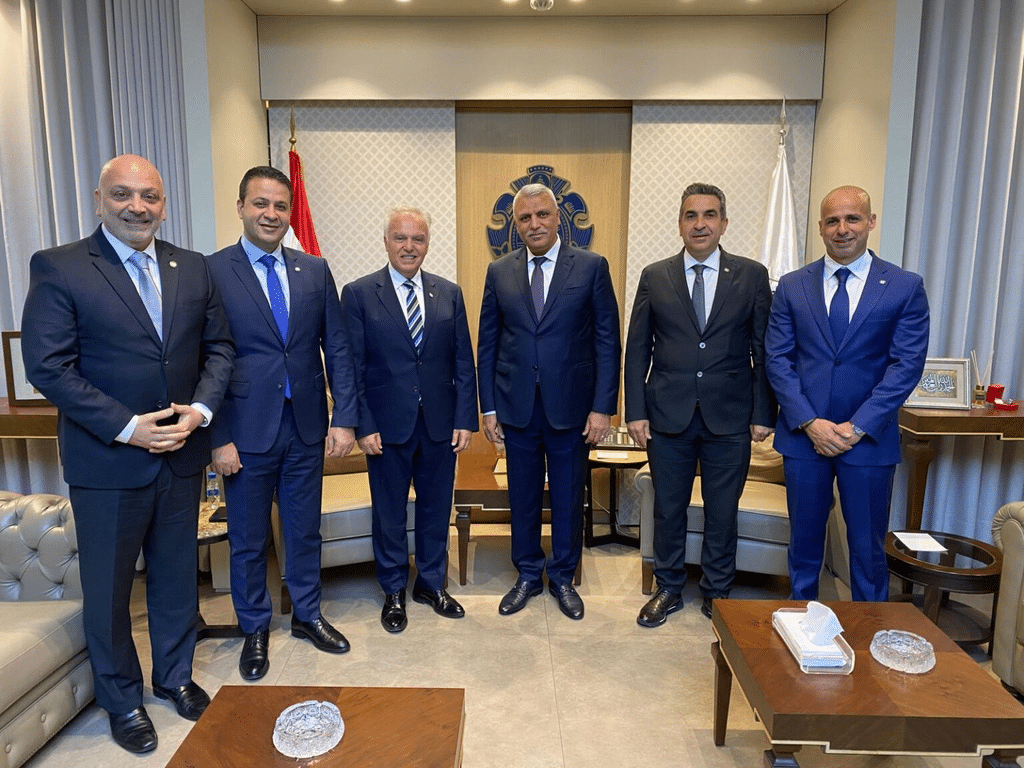
World Lebanese Cultural Union (WLCU) President Dr Abraham Constantin has led a delegation to meet Lebanon’s Director General of General Security, Major General Hassan Choukeir, for discussions on national security, economic challenges and the vital role of Lebanese communities abroad in supporting their homeland.
The meeting brought together representatives of the WLCU and one of Lebanon’s principal security institutions to explore ways of strengthening cooperation, supporting state institutions and mobilising the resources and international influence of the Lebanese diaspora.
Accompanying Dr Constantin were WLCU Secretary General Mohammad Raslan and Vice Presidents Hassan Moussa, Consul Mohammad El Jouzou and Remi Wehbe.
The discussions addressed several major national priorities, including support for the Lebanese Army and General Security, the development of border crossings, plans to activate Qleiaat Airport in northern Lebanon, the return of displaced Syrians and cooperation with Iraq to address Lebanon’s energy needs.
Constantin Calls for Stronger State Institutions and a More Influential Lebanese Diaspora
During the meeting, Dr Constantin reaffirmed the WLCU’s commitment to supporting Lebanon’s legitimate state institutions, particularly the Lebanese Army and the General Directorate of General Security.
He emphasised that strong national institutions are essential to safeguarding Lebanon’s sovereignty, maintaining stability and restoring confidence in the country’s future.
Dr Constantin also highlighted the importance of expanding the diaspora’s contribution beyond traditional financial assistance and family support.
He called for greater mobilisation of Lebanese professionals, business leaders and community organisations worldwide to establish an influential international network capable of advocating for Lebanon’s interests.
Such a network, he suggested, could strengthen Lebanon’s voice in political, economic and social decision-making circles across the world.
The WLCU President also praised Major General Choukeir’s efforts to strengthen cooperation between Lebanon and Iraq, particularly in the energy sector, where regional partnerships could help address Lebanon’s persistent electricity challenges.
Choukeir Highlights the Diaspora’s Multibillion-Dollar Contribution
Major General Hassan Choukeir acknowledged the essential role played by Lebanese expatriates in sustaining families and communities through the country’s successive economic and political crises.
He highlighted the importance of remittances from Lebanese communities abroad, citing annual transfers of approximately US$7 billion to US$8 billion.
These funds, he explained, have helped families meet essential living expenses and provided a crucial source of support during periods of severe economic hardship.
Beyond financial assistance, Choukeir praised the solidarity demonstrated by Lebanese families during periods of displacement and instability.
He referred to the support provided to people forced to leave their homes in southern Lebanon, including assistance offered by relatives and extended family networks.
According to Choukeir, these examples reflect the strength of the connections between Lebanese residents and expatriates, demonstrating how family and community networks can provide support when national circumstances become particularly difficult.
He also recognised the efforts of Lebanese communities overseas in promoting their homeland internationally and establishing advocacy networks to defend Lebanon’s interests.
Qleiaat Airport: General Security Prepared for International Arrivals
A significant development discussed during the meeting concerned plans to activate Qleiaat Airport, also known as René Mouawad Airport, in northern Lebanon.
Major General Choukeir indicated that the General Directorate of General Security was prepared to establish a dedicated office at the airport to process passengers arriving on international flights.
He identified 22 November as a target date for the commencement of flight operations.
The proposed activation of the airport could represent an important step towards expanding Lebanon’s aviation infrastructure and improving connectivity between the country and international destinations.
For northern Lebanon in particular, the airport could offer opportunities for tourism, investment and regional economic development.
However, the proposed commencement date remains dependent on the completion of the necessary government approvals, operational arrangements and aviation requirements.
No confirmation of scheduled commercial flights was established during the meeting.
Plans to Modernise Lebanon’s Border Crossings
The meeting also examined ongoing efforts to improve Lebanon’s border infrastructure and strengthen the operational capacity of General Security.
Major General Choukeir outlined plans for new facilities at the Aboudieh and Masnaa land border crossings, which serve as important entry and exit points between Lebanon and Syria.
The proposed improvements aim to modernise border infrastructure, facilitate passenger movement and strengthen the effectiveness of official procedures.
Choukeir reaffirmed General Security’s commitment to fulfilling its responsibilities across Lebanon’s land, air and maritime entry points.
Modernising these facilities is particularly important for trade, travel and the movement of people, while supporting the broader objective of strengthening the presence and effectiveness of Lebanese state institutions.
More Than 500,000 Syrians Reportedly Returned Over 18 Months
Another major issue addressed was the return of displaced Syrians from Lebanon to Syria.
Major General Choukeir stated that a government plan implemented through the General Directorate of General Security had resulted in the return of more than 500,000 Syrians over approximately 18 months.
The figure was presented during the meeting as an indication of the scale of returns under the Lebanese authorities’ efforts to address the displacement issue.
The return of displaced Syrians remains one of Lebanon’s most complex national challenges, given its humanitarian, economic, social and public-service implications.
The reported figure has not been independently verified for this article, and the available account does not establish how many returns were voluntary, permanent or formally registered under the government programme.
Any further assessment of the initiative would require detailed official statistics and information about the conditions under which returns took place.
Energy Cooperation with Iraq Remains a National Priority
The discussions also touched on Lebanon’s cooperation with Iraq, particularly initiatives intended to support the country’s energy sector.
Dr Constantin acknowledged Major General Choukeir’s involvement in efforts to facilitate cooperation between the two countries, recognising the importance of regional partnerships in addressing Lebanon’s electricity shortages.
Lebanon’s energy challenges have placed considerable pressure on households, businesses and public institutions, making reliable electricity supply an essential component of economic recovery.
Although no new energy agreement was announced during the meeting, the issue formed part of broader discussions about strengthening Lebanon’s economic resilience and international cooperation.
A Shared Commitment to Lebanon’s Future
The meeting between Dr Abraham Constantin and Major General Hassan Choukeir highlighted the close relationship between Lebanon’s domestic challenges and the potential contribution of its global diaspora.
While General Security continues to address responsibilities involving border management, travel, displacement and national security, the WLCU is seeking to strengthen the involvement of Lebanese communities abroad in supporting the country’s institutions and development.
The discussions reflected a broader vision in which Lebanon’s diaspora is recognised not simply as a source of financial remittances, but as an international network of expertise, influence and resources capable of contributing to national recovery.
From supporting the Lebanese Army and General Security to advocating for Lebanon internationally, the WLCU aims to encourage more organised and sustainable engagement between Lebanese communities overseas and their homeland.
The proposed activation of Qleiaat Airport, improvements to border infrastructure, cooperation with Iraq and management of the Syrian displacement issue all represent areas where institutional coordination and effective implementation will be essential.
Concluding the meeting, Dr Constantin delivered a message emphasising national unity and collective responsibility:
“All of us, together, for the homeland.”
The statement captured the central theme of the discussions: that Lebanon’s stability and future depend on cooperation between its institutions, its people at home and its communities throughout the world.