
Arabic version: تفشّي الجراد يضغط على المناطق الرعوية في جنوب أستراليا
According to ABC News, producers in South Australia’s Mid North and Flinders Ranges are reporting significant locust outbreaks, with some landholders saying the window for effective control has passed. The Department of Primary Industries and Regions began surveying outbreaks in early September and has completed aerial spraying across 115,000 hectares around the Flinders and Mid North regions.
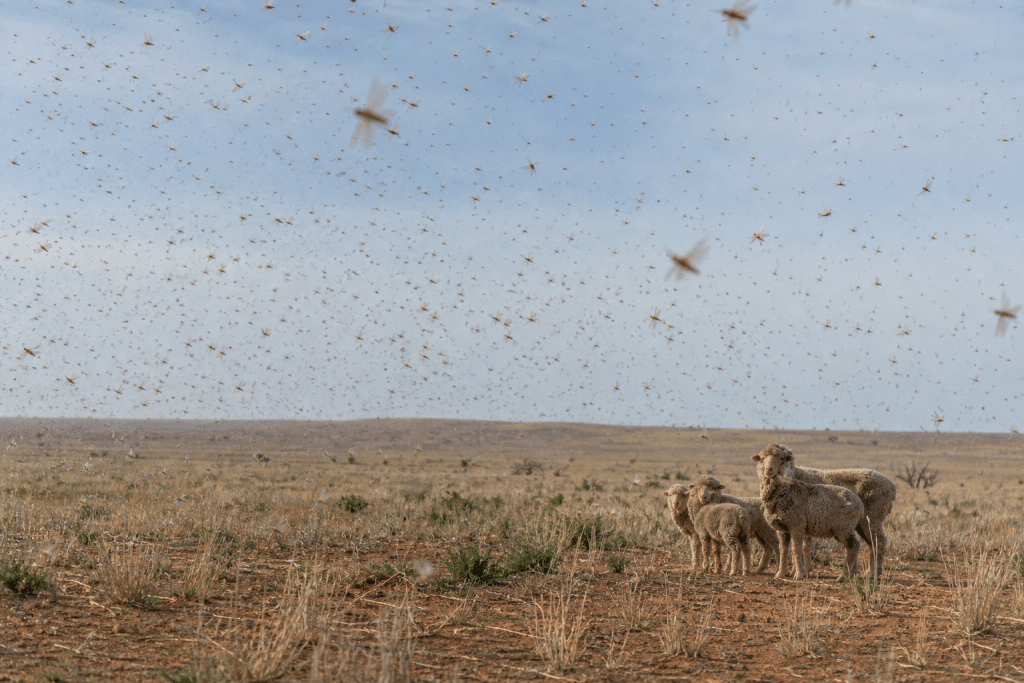
Peterborough livestock producer Bridget Woods said she reported locusts to PIRSA about five weeks before aerial spraying began at her property on Thursday. She said thousands of insects initially measured about half a centimetre and consumed clover plants, leaving half-formed seed pods. Following rain, their size and numbers increased, she said, with locusts covering watercourses and becoming too dense for a motorbike to pass through.
South Australia’s locust commissioner, Michael McManus, said survey teams had visited Peterborough regularly and that adult swarms had infested the area during the previous week, prompting aerial spraying. He said decisions on aerial operations require consideration of target size and landscape, as the department seeks to control large areas efficiently and focus on targets where large populations can be effectively reduced.
At Mount Little Station in the Flinders Ranges, pastoralist Peter Zadow said locusts had been out of control this year. He said control is most effective during the banding stage, a few weeks after hatching, when insects gather in large groups. PIRSA monitored his property but determined the outbreak did not meet the threshold for aerial spraying. McManus said producers could try controlling adult locusts in the morning or evening when they settle, while PIRSA continues monitoring and sprays where possible.