












Arabic version: مراكز بيانات الذكاء الاصطناعي تولّد طلباً جديداً على الشحن البري
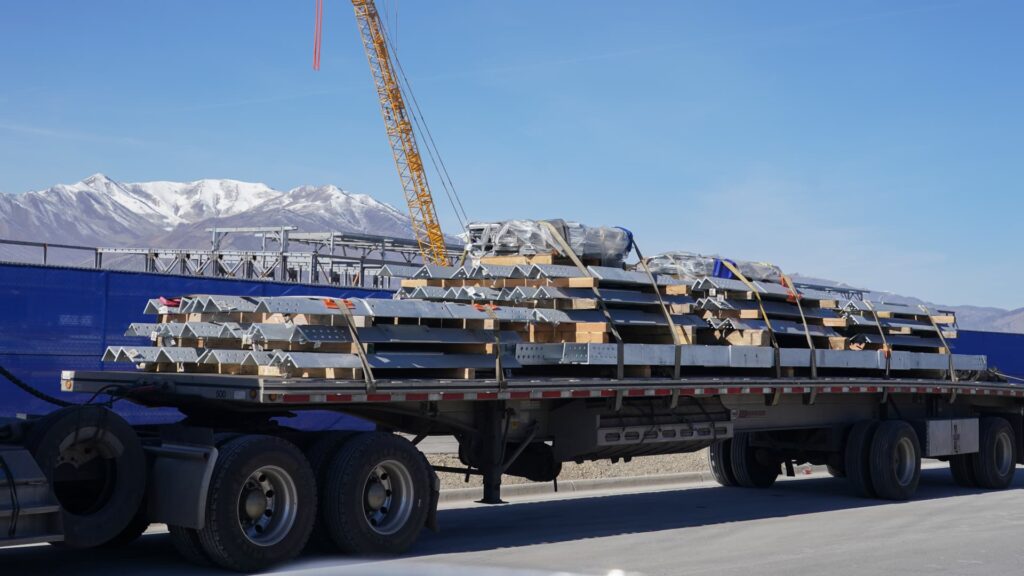
According to Cnbc, AI data center construction is providing a boost to trucking as the freight business faces uneven demand, trade tariffs and rising diesel prices. Data centers require deliveries of components including HVAC systems, tubing, wiring and semiconductors, with much of the material arriving by truck or by rail before being moved by truck to project sites.
Patrick Brennan, senior vice president of fleet management solutions provider Cox Fleet, said AI and data center activity offers an opportunity for fleets. Flatbed and heavy-haul carriers are seeing the strongest effect as contractors transport turbines, switchgear, servers, racks, generators, transformers, cooling systems and construction materials. Brennan said spot rates in those segments have reached multiyear highs this summer, while capacity is tight in construction-heavy markets.
The construction boom is also changing freight routes. Janelle Griffith, global logistics practice leader at Marsh, said trucking traffic and routes are seeing spikes in Georgia and Texas. Research cited by Griffith found that 67 percent of planned data center developments are in rural areas, while 39 percent of planned facilities are in counties that currently have none. The projects are increasing demand for CDL drivers, diesel technicians, fleet maintenance workers and logistics personnel, according to Brennan.
Smaller carriers can gain more consistent freight and enter new lanes, said Jennifer Lockett of transportation financing firm altLINE. But larger workloads may require more trucks, drivers and equipment, putting pressure on cash flow before customers pay for fuel, labor and maintenance. Industry experts cautioned that the construction-related surge may not last: Kyle Roberts of Newmark Mountain West described an “extraordinary drop off” in truck traffic after a data center is completed, and Kyre Lahtinen of Wake Forest University said data centers need comparatively little logistics support once built.