
Arabic version: دراسة في جاوة الشرقية تبحث المخاطر الصحية لحرق البلاستيك
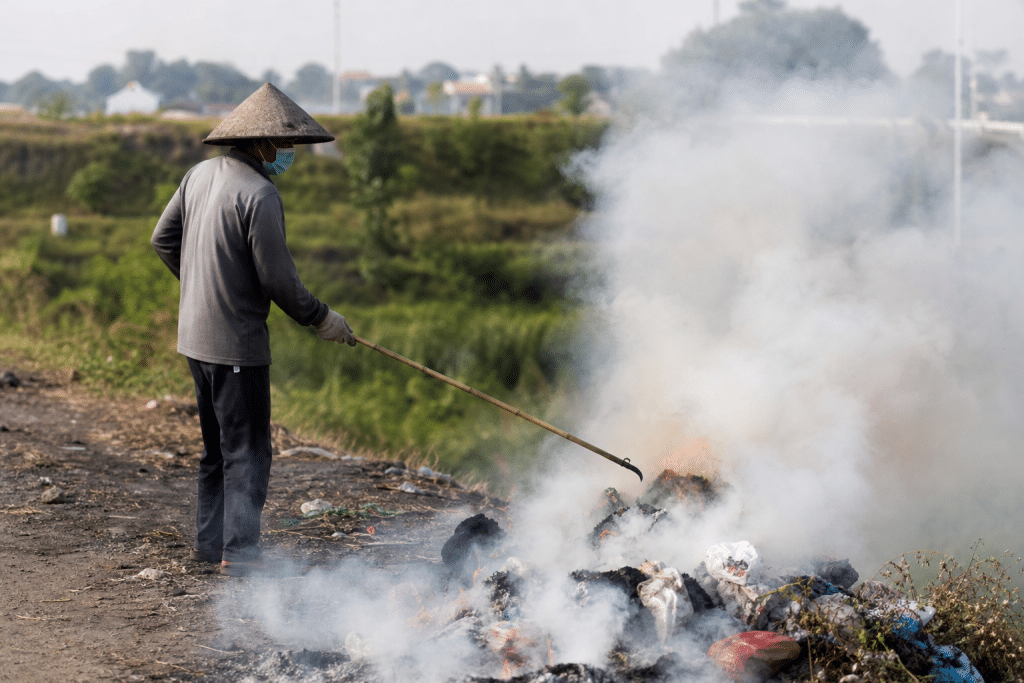
According to ABC News, researchers are examining potential health impacts for communities in East Java, Indonesia, where plastic waste was burned to fuel limestone kilns. The practice supported people who sorted factory waste residue for recyclable paper, cardboard and plastic, but concerns remain over exposure to smoke.
Ahmad Yani said his family and others in Sumberejo had bought truckloads of waste from factories recycling imported paper and cardboard for decades. He said he earned about 300,000 rupiah ($24) a month from the work. Remaining plastic was used to fire kilns that produced building materials. Mr Yani said he had seen packaging carrying Australian and European labels, and that burning in his village stopped about a year ago.
Sekar Aqila Salsabilla, a researcher at Brawijaya University’s Climate and Health Centre, said pre-screening tests conducted earlier this year found at least 20 per cent of more than 4,000 participants across six East Java villages were at high risk of cardiovascular disease and chronic obstructive pulmonary disease. She said many people earning income by sorting waste were unaware of the dangers linked to handling and burning it.
Indonesia’s Ministry of Environment said limited waste-management services, irregular collections and insufficient recycling facilities had contributed to open burning. Environmental group Ecoton said plastic with Australian labels could still be found in East Java and alleged enforcement remained weak. Australia exported 701,000 tonnes of paper and cardboard to Indonesia in the recent financial year, while Indonesia applies a 2 per cent contamination limit to paper-waste imports.