











Arabic version: تهريب الأسلحة يهدد انتخابات جنوب السودان في ديسمبر
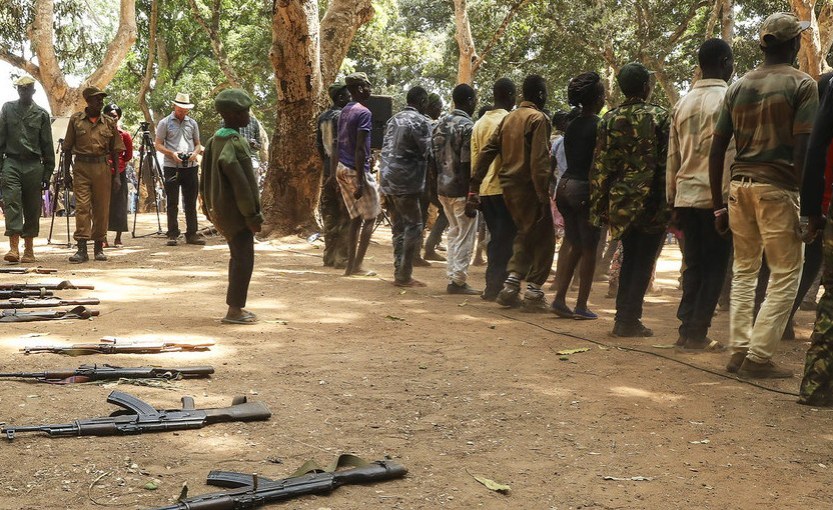
According to Allafrica, illicit arms flows are a major threat to South Sudan’s planned December 2026 national elections, as political divisions, Vice-President Riek Machar’s continued detention and increasing militarisation place the country’s fragile transition under pressure. The government has fixed December for the vote, which citizens and international observers hope could advance peace if conducted freely and fairly.
South Sudan People’s Movement/Army leader General Stephen Buay Rolnyang recently said his movement was ready for confrontation and described the planned polls as a calculated façade. The 2018 peace agreement has also been affected by disputes over unilateral government amendments. Although South Sudan’s 2013-2018 civil war formally ended, frequent localised conflicts continue to threaten civilian safety, state-building and election preparations.
A UN arms embargo imposed in 2018 remains in force but has not stopped illegal inflows, the report said. From January to March 2026, the UN Mission in South Sudan’s Human Rights Division documented 206 incidents of conflict-related violence affecting 1,388 civilians. The incidents caused 767 deaths, 457 injuries, 93 abductions and 71 cases of conflict-related sexual violence.
Institute for Security Studies research in May found concern over whether elections could be held nationwide. Civil society actors in Juba said voting might be possible only in a few urban centres, while many rural areas were inaccessible or controlled by rebels and armed groups supplied through illicit weapons networks. About 80% of South Sudan’s 9.6 million people live in rural areas, raising concerns that millions of eligible voters could be excluded.
The conflict in neighbouring Sudan has enabled weapons to move into South Sudan and through the country, while transnational demand is also linked to insecurity in Ethiopia, the Central African Republic and the Democratic Republic of the Congo. The analysis called for a regional approach, including joint cross-border task forces and alignment with disarmament, demobilisation and reintegration programmes to reduce both arms supplies and internal demand.