












Arabic version: نمو أستراليا يتجاوز التوقعات ويرفع مخاطر زيادة الفائدة
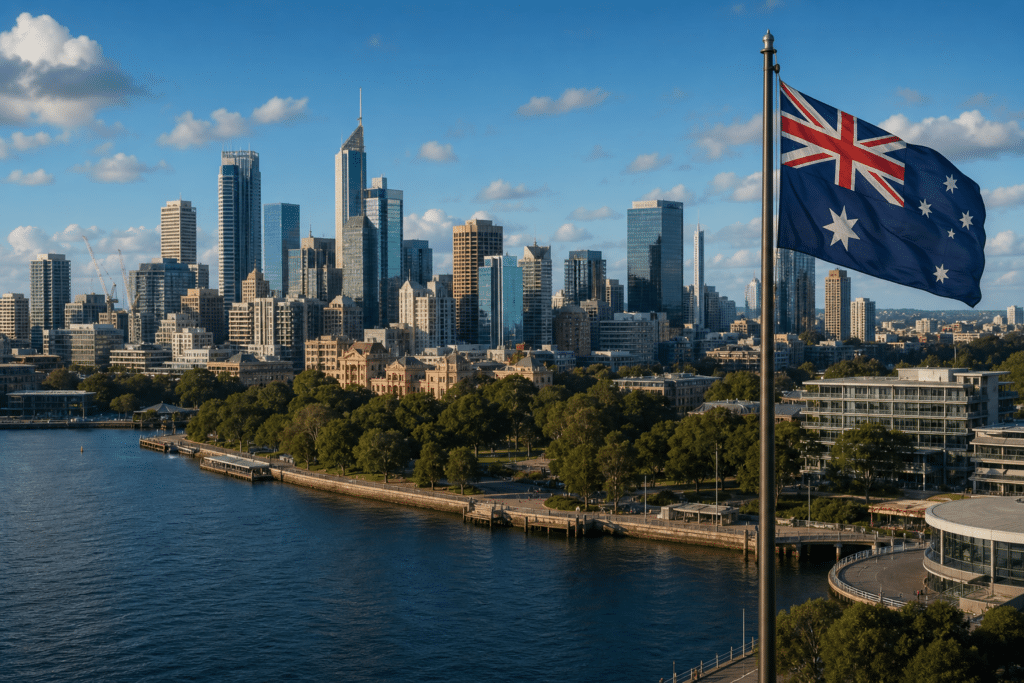
According to ABC News, Australia’s economy grew 0.4 per cent in the June quarter and 2.1 per cent over the year to June 30, with both results slightly ahead of economist forecasts. Forecasts had centred on quarterly growth of 0.3 per cent and annual growth of 1.8 per cent, based on the latest Australian Bureau of Statistics National Accounts.
Treasurer Jim Chalmers said the figures showed Australia’s relative economic outperformance in challenging global circumstances. He said annual growth was as strong or stronger than every major advanced economy, equal to the United States and stronger than the rest.
The figures increased expectations that the Reserve Bank of Australia could lift interest rates. Bloomberg analysis of futures-market pricing put the chance of a September rate rise at about 70 per cent, up from about 50 per cent before the data. A rise by November was fully priced in, while market pricing indicated the cash rate could peak at 4.8 per cent by the middle of next year, compared with the current 4.35 per cent.
Economists also pointed to weaknesses beneath the headline growth. IFM Investors chief economist Alex Joiner said productivity remained poor, per-capita GDP was flat and unit labour cost growth was elevated. Capital Economics’ Marcel Thieliant said a further rate increase was not certain because the labour market was loosening and revised data showed the housing downturn had accelerated.
Dwelling investment grew 1.6 per cent in the quarter and was 5.8 per cent higher through the year. Household consumption rose 0.4 per cent, contributing about half of overall growth, with discretionary spending driven largely by vehicle purchases. The ABS said record electric and hybrid vehicle sales helped lift the category, while essentials spending fell 0.3 per cent as a mild winter reduced heating demand and high fuel prices curtailed driving.