











A City Under Siege
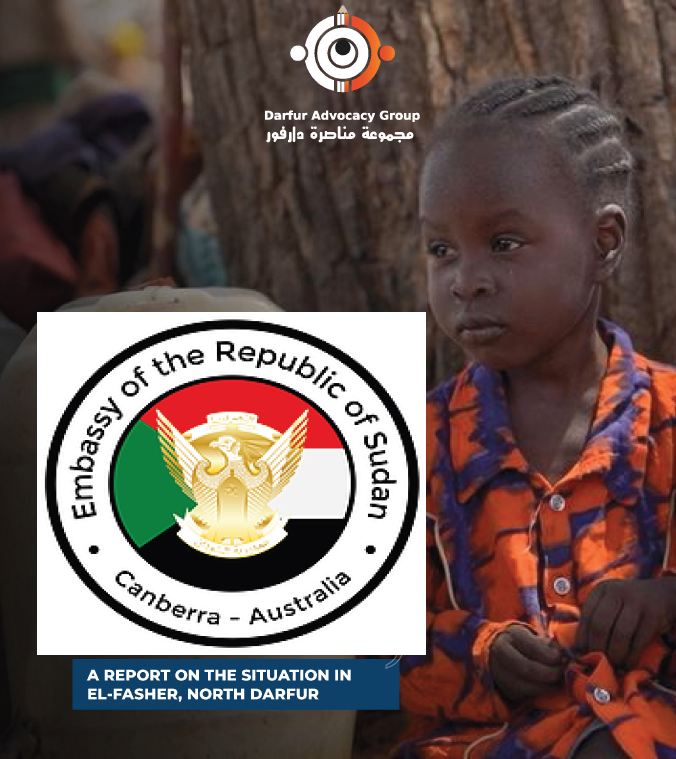
A new report by the Darfur Advocacy Group (DAG) has accused the Rapid Support Forces (RSF) of committing acts of genocide in El Fasher, North Darfur. The document, compiled from survivor testimonies and verified field sources, paints a harrowing picture of a city transformed from a once-thriving hub into what witnesses call “an open graveyard.”
According to the report, the RSF imposed a total siege on El Fasher from May 2024, creating what researchers later identified as “31 kilometres of trenches and berms” designed to trap civilians. By October 26, 2025, when the RSF declared full control over the city, satellite imagery and videos showed mass killings near the 6th Infantry Division Headquarters, corroborating the group’s claims (full report).
The UN High Commissioner for Human Rights confirmed receiving “appalling reports of summary executions and ethnically motivated crimes” against civilians, with witnesses describing door-to-door raids, executions inside hospitals, and systematic attacks targeting indigenous African communities (full report).
Hospitals Turned into Execution Sites
Among the most shocking findings are accounts of atrocities committed inside medical facilities. Hospitals such as the Saudi Hospital, Plan Hospital, and El Fasher University’s Al-Rashid Dormitory were stormed by RSF fighters after the city’s fall. Survivors recount that patients, medical staff, and even pregnant women were executed inside wards.
One doctor, hiding under a staircase during the attack, described seeing seven patients shot dead before his eyes. Another witness reported that over 400 injured civilians sheltering in the university dormitory were executed en masse (full report).
These accounts align with international analyses confirming large-scale destruction and civilian deaths in El Fasher in late October 2025.
Escape Routes of Death
As families fled the city, the roads to Tawilah and Abu Shouk became killing fields. Survivors recounted how RSF units intercepted convoys, executing those identified as members of the Zaghawa ethnic group or suspected of links to the Joint Forces allied with Sudan’s army.
A female survivor told investigators, “We fled death in El Fasher only to find it before us. Corpses lay on the roads, and children died from thirst and bleeding.” Another described the execution of a nine-year-old boy after he raised his hands during a search (full report).
Satellite analysis confirmed heavy RSF activity along these routes, consistent with what humanitarian monitors have termed identity-based extermination.
Women at the Centre of Targeted Violence
The report devotes a full section to sexual violence, describing it as a deliberate weapon of war. Witnesses detailed how RSF fighters selected women and girls from crowds, abducted them in trucks, and demanded ransom payments for their release.
One survivor stated, “Many girls were taken; they chose them from the lines. They know no redlines.” Another described being detained with 18 other women and 40 men in a makeshift facility where the captors demanded up to two million Sudanese pounds per person for release (full report).
These accounts mirror earlier findings on the RSF’s use of gender-based violence in Darfur since 2003, underscoring the persistent impunity that has allowed such crimes to recur.
Looting, Kidnapping, and Extortion
The document includes verified testimonies showing RSF fighters looting homes in the Daraja Oula neighbourhood and holding civilians hostage for ransom. One man, Najm al-Din Ali Ezzu, appeared in a recorded plea under armed guard, begging his family to send 15,000 Sudanese pounds to secure his release—a chilling indicator of how ransom has become a method of both terror and revenue for the militia (full report).
International Calls for Action
The Darfur Advocacy Group’s recommendations urge the United Nations Security Council and the African Union to intervene under Chapter VII of the UN Charter and Article 4(h) of the AU Constitutive Act to stop what it defines as an ongoing genocide.
Key demands include:
- Deployment of a robust peacekeeping force with a mandate to protect civilians.
- Immediate humanitarian access to deliver food, medicine, and psychological support.
- A comprehensive arms embargo and investigation into the regional supply chains arming the RSF.
- Creation of safe medical and trauma-response centres for survivors of sexual violence (full report).
The report also condemns the 2020 withdrawal of the UN-AU Mission in Darfur (UNAMID) as a “reckless decision” that left civilians defenceless and enabled militias to act with impunity.
The World’s Silence
In its conclusion, the report warns that history is repeating itself. Despite UN Security Council Resolution 1591 (2005)—which referred Darfur to the International Criminal Court—and its 2024 renewal under Resolution 2683, armed groups continue to operate freely.
“The voice of Darfur does not ask for pity,” the report states, “but for justice.” It accuses the international community of turning a blind eye as the same perpetrators from past conflicts re-emerge in positions of power, while survivors are left to mourn in silence (full report).
Global Reactions
Human rights advocates and regional analysts have echoed DAG’s warnings, with multiple humanitarian monitors verifying patterns consistent with war crimes and crimes against humanity. Meanwhile, international organisations have renewed calls for a UN arms embargo enforcement mechanism and independent investigations into RSF leadership.
A Plea for Accountability
As famine deepens and communications remain cut off, El Fasher stands as a grim symbol of a conflict the world has allowed to fester. The Darfur Advocacy Group concludes its report with a stark reminder:
“Justice is not a request—it is an urgent humanitarian duty. If the world does not act now, Darfur will witness a new chapter no less brutal than before.”
(Read the full Al Fasher Report here).