











Arabic version: مسح غوص يثير القلق بشأن الحبار الأسترالي العملاق
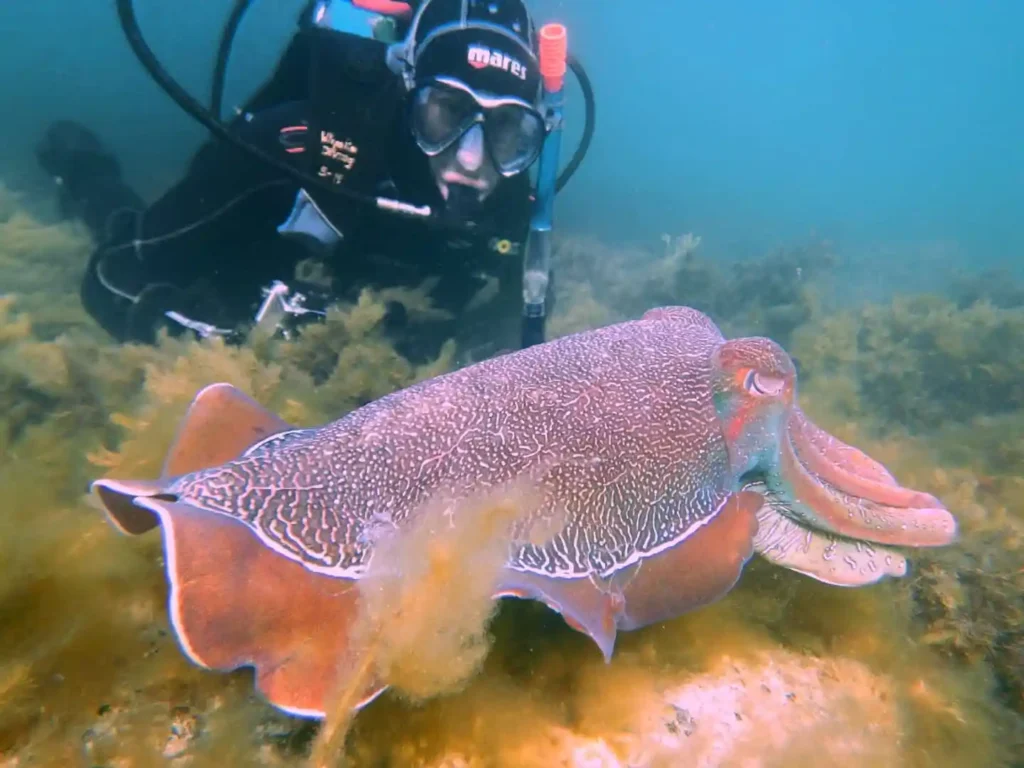
According to The Guardian, a July dive survey by ecological not-for-profit Eyrelab counted only 44 giant Australian cuttlefish off Whyalla in South Australia’s upper Spencer Gulf, prompting fears of a “catastrophic” decline. The four-diver team also recorded 440 eggs, where there would normally be millions.
Each year, tens to hundreds of thousands of giant Australian cuttlefish gather in the upper Spencer Gulf to breed, the only place globally where cuttlefish assemble en masse. Surveys dating to 1998 have recorded populations from 13,500 in 2013 to 247,000 in 2020, while more than 63,000 were recorded in 2025. Manny Katz, an Eyrelab director and diver, said the latest abundance was the lowest on record and that the few dozen animals seen were hiding.
The state government said its surveys had been completed and that 2026 estimates would be released after review. A spokesperson said cuttlefish numbers naturally vary with environmental conditions and that researchers were assessing whether the algal bloom contributed to a reduced population. Prof Mike Steer of the SA Research and Development Institute had said on 30 June that fewer than 50 animals had been observed earlier in the season, while cautioning those were raw counts requiring further monitoring and analysis.
Tourism and dive operators in Whyalla cancelled their cuttlefish season in June. On 1 July, the government imposed temporary restrictions on activities including swimming and snorkelling to reduce disturbance to breeding cuttlefish and protect eggs and hatchlings. Associate Prof Zoe Doubleday of Adelaide University said the bloom may have killed cuttlefish directly or altered food availability for the animals or their predators. Adults usually die after breeding, leaving the population heavily dependent on each breeding season.
The toxic Karenia cristata bloom, which began in March last year, remains present along parts of the South Australian coast. Latest testing found elevated Karenia levels at seven of 32 sites on the Eyre peninsula and two of 19 sites on the Yorke peninsula. Marine biologist Stefan Andrews called for the official figures to be released and said the federal government should assess whether the species should be listed as threatened.