












Arabic version: الجاذبية المستمرة لدولي بارتون عبر الأجيال الأصغر سناً
According to ABC News, Dolly Parton’s songwriting, humour and willingness to embrace change helped the country icon build a following far beyond the era of her first single, released in 1959. Parton, who died this week, remained visible to younger audiences through music, television and online culture.
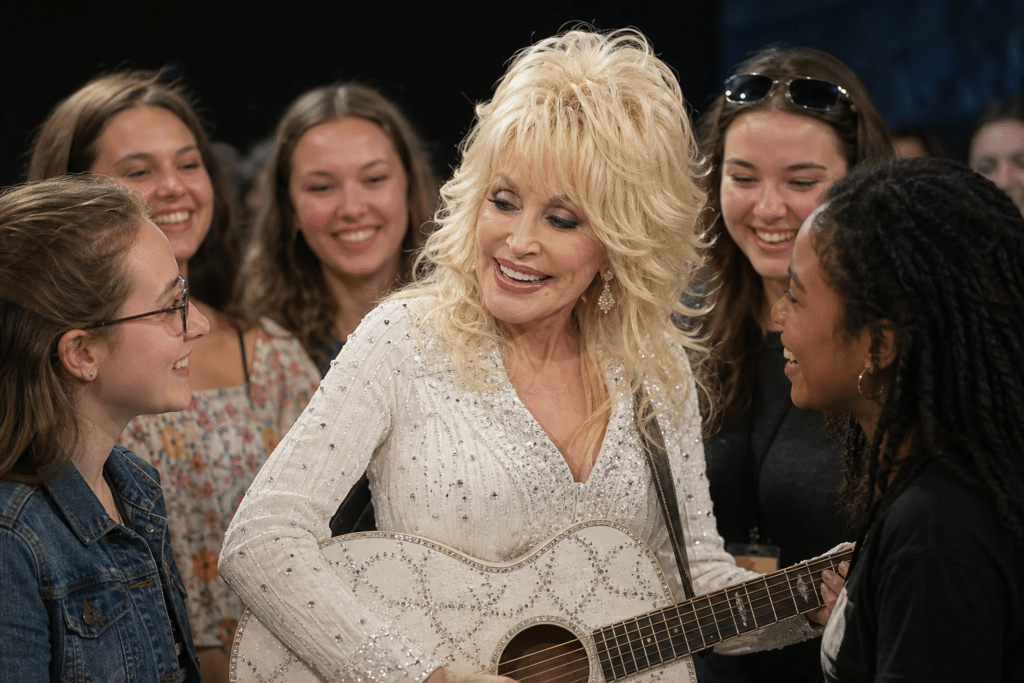
Her role as Aunt Dolly on Disney Channel series Hannah Montana introduced her to a new generation of largely female fans. Parton told Vanity Fair in 2020 that the program had given her “a whole new following” of young people. Her social media presence also connected widely, including a 2020 post that inspired the Dolly Parton Challenge.
Classic songs including Jolene, 9 to 5 and Here You Come Again found renewed attention through TikTok and viral clips, while musicians continued to reinterpret her work. Beyoncé covered Jolene on 2024’s Cowboy Carter and included Parton in a spoken-word appearance and a duet on Tyrant. The White Stripes also recorded Jolene for their 2004 live release Under Blackpool Lights.
Parton openly welcomed changing technology and musical tastes. During a 2011 appearance on triple j, she discussed a new mobile phone app and said she tried to surround herself with young people who understood high tech. She also said she did not criticise or judge other people’s work, describing the range of music available as “wonderful”.
Artists cited in the report pointed to both her musical influence and her public character. Henry Wagons said Parton had “generations worth of musical influence”, while Kyla Belle called her music “such a blessing”. Alex Lahey highlighted Parton’s advocacy for LGBTQIA+ rights, public health funding and literacy, and G Flip described her as a strong LGBTQIA+ ally. For younger listeners and performers, Parton’s reach extended beyond country music to a broader image of tolerance, self-possession and connection.