














Arabic version: أول محاكمة لمسؤول في نظام الأسد تسلط الضوء على التحول في نظام العدالة السوري
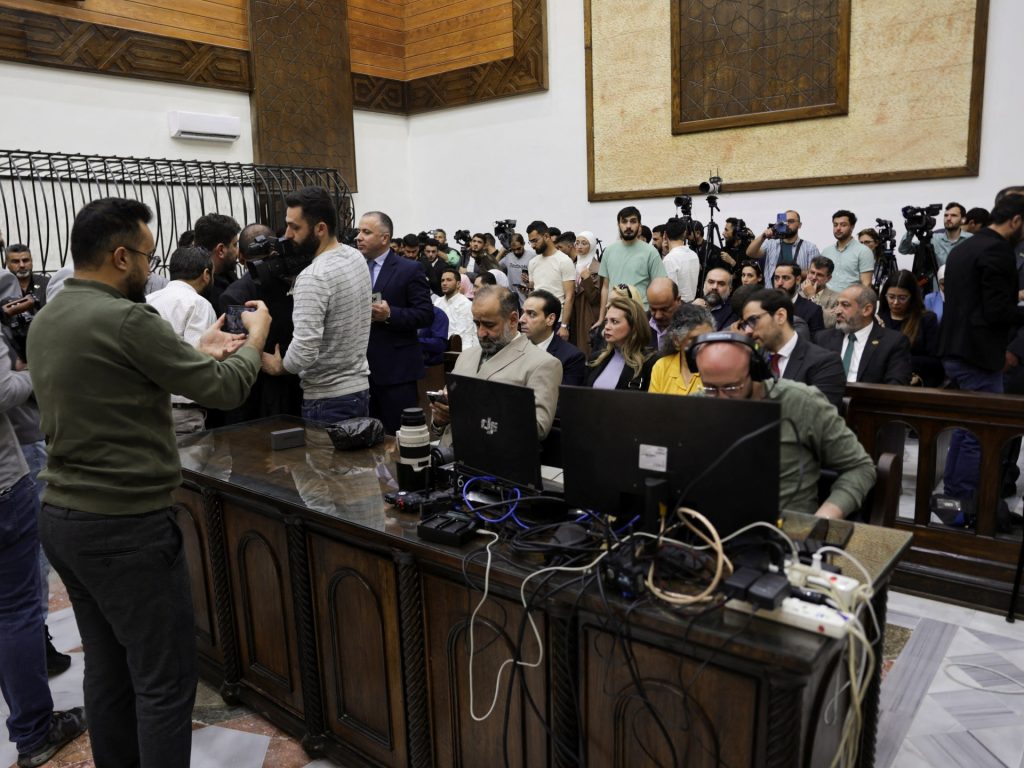
On April 26, 2026, a significant trial commenced in Damascus, marking a pivotal moment in Syria’s judicial landscape. Atef Najib, a former head of the Political Security Department in Deraa and cousin of ousted President Bashar al-Assad, faces charges including premeditated murder and torture leading to death. This trial represents a notable shift as it is presided over by Fakhr al-Din al-Aryan, a judge who defected from the Assad regime in 2013 and was sentenced to death in absentia.
According to Al Jazeera, al-Aryan’s return to the judiciary symbolizes a reversal of power dynamics in Syria. Fadel Abdulghany, founder of the Syrian Network for Human Rights, emphasized the significance of a judge who once defended the rule of law now applying it to a regime perpetrator. This moment highlights the complex journey towards justice in a nation scarred by years of conflict.
Najib’s trial is particularly significant due to his involvement in the early repression of protests in Deraa, known as the “cradle of the revolution.” His actions, including the torture of schoolchildren, are seen as pivotal in igniting widespread dissent against the Assad regime. Najib was arrested in January 2025 in Latakia, where former regime loyalists sought refuge.
The trial is being conducted through formal legal channels, moving beyond mere revolutionary justice. Abdulghany noted that this case adheres to international criminal standards, which is crucial for its credibility. The inclusion of both Bashar al-Assad and his brother Maher as defendants in absentia underscores that legal accountability remains despite their physical absence.
Despite this landmark trial, Abdulghany cautioned that it is only a part of a broader transitional justice process necessary for Syria. He highlighted the need for comprehensive reforms to the judiciary, alongside truth-seeking and reparations for victims’ families. Without these changes, he argued, the judicial system risks perpetuating the same repressive practices it once upheld. The path to justice in Syria, therefore, remains a multifaceted challenge requiring sustained efforts on multiple fronts.