
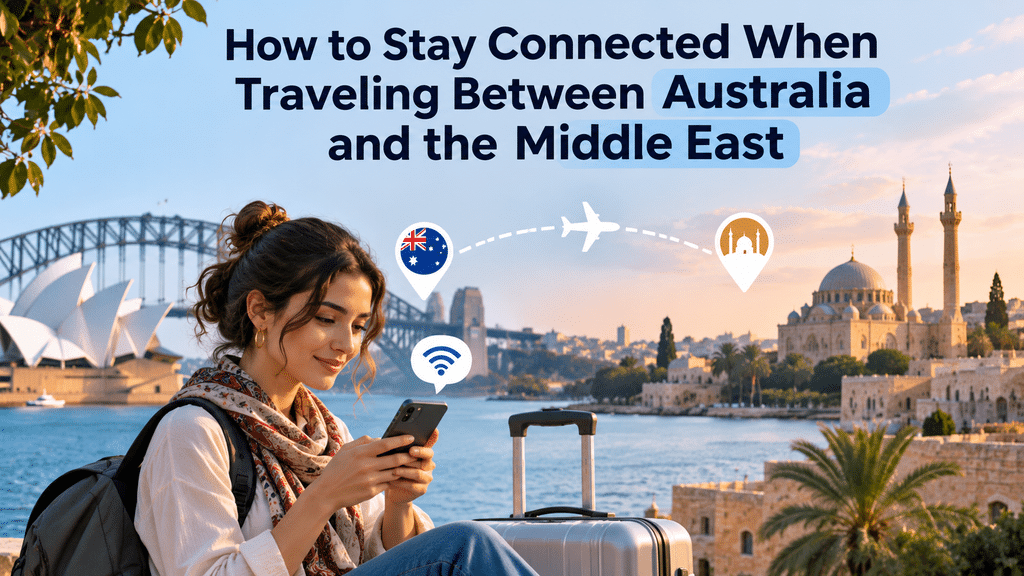
Traveling between Australia and the Middle East often means long flights, airport connections, and plenty of time away from your usual routines. Whether you’re visiting family in Lebanon, exploring Dubai, or heading to Jordan for a holiday, staying connected can make the entire journey easier.
You might need to message relatives after landing, check your hotel reservation, find directions, or access important documents stored online. Having a reliable internet connection helps you manage these everyday tasks without unnecessary stress.
The good news is that staying connected overseas doesn’t have to be complicated. With a little preparation, the right mobile plan, and a few useful apps, you can keep in touch and travel with confidence.
Before You Travel: Check Your Mobile Plan
Your mobile phone will probably be one of your most important travel tools. Before leaving Australia, take a few minutes to review how your phone will work overseas.
Check Your International Roaming Options
Australian mobile providers offer different international roaming packages. Some include daily data allowances, while others charge separately for calls, messages, and internet usage.
Check which countries your plan covers and how much data you can use. A roaming package that works well in the United Arab Emirates might have different conditions in Lebanon or Jordan.
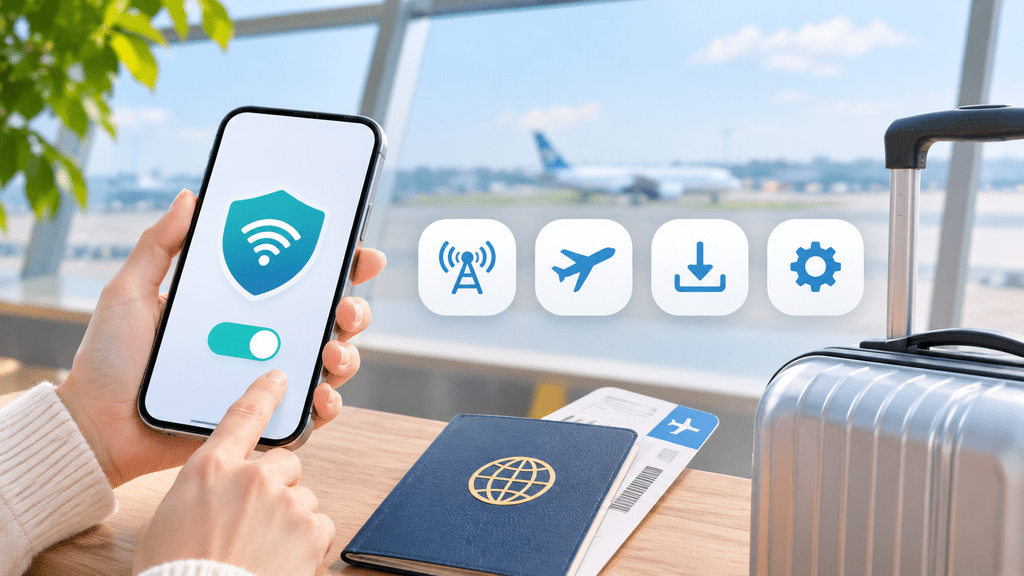
It also helps to prepare your phone for the public networks you’ll encounter along the way. Installing a free VPN tool before departure gives you a way to encrypt your internet traffic when connecting through airport lounges, hotels, and cafés.
Prepare Your Phone Before Departure
A short checklist can save you time after landing.
Step 1: Check whether your mobile plan supports roaming in your destination country.
Step 2: Download essential travel apps, including airline, navigation, and messaging services.
Step 3: Update your phone’s operating system and frequently used apps.
Step 4: Save important travel information somewhere you can access offline.
Completing these simple tasks at home means fewer things to manage when you arrive.
Choose Between International Roaming and an eSIM
International roaming is convenient, but it isn’t always the most economical way to stay connected abroad.
If you’re spending several weeks visiting family or traveling between multiple Middle Eastern countries, an eSIM or local SIM card may offer better value.
Why Consider an eSIM?
An eSIM is a digital SIM that allows compatible phones to connect to a mobile network without inserting a physical card.
Many travel eSIM providers offer regional packages covering several countries. You can often purchase and install one before departure, then activate it when you arrive.
This is particularly useful when traveling through more than one destination.
For example, you might spend a few days in Dubai before continuing to Beirut. A suitable regional plan could cover both stops.
Keep Access to Your Familiar Online Services
Traveling can also change how websites and online services respond to your connection.
Some websites automatically display regional content based on your IP address. Others may show different language settings or country-specific pages.
If you prefer an Australia IP while browsing abroad, connecting to an Australian VPN server can make your connection appear to originate from Australia.
This can be useful when checking familiar Australian websites or browsing services that offer location-based content.
For everyday internet access, choose a reliable local mobile network and keep an eye on your data allowance.
Stay in Touch With Family Across Borders

For many Australians with family connections across the Middle East, communication is one of the most important parts of traveling.
A quick message to say you’ve landed safely can mean a lot, especially when relatives are waiting to welcome you.
Choose the Right Communication Apps
Before traveling, check which messaging apps your family and friends use most frequently.
WhatsApp, Messenger, FaceTime, and other communication services are popular choices, although availability and calling features can vary by country and network.
It’s worth having more than one way to reach people.
For example, you could use a messaging app for everyday conversations while keeping ordinary mobile calls and SMS available for emergencies.
If you’re traveling with an iPhone, installing a free iOS VPN before departure can also help protect your internet connection when using shared Wi-Fi networks.
Plan Around Time Differences
Australia and the Middle East operate in different time zones, which can make arranging calls surprisingly difficult.
Depending on the season, the time difference between Sydney and Beirut can change significantly.
Rather than relying on mental calculations, use your phone’s world clock to save the cities you contact most frequently.
It makes coordinating family calls, work meetings, and airport pickups much easier.
Share Important Travel Updates
Consider creating a small family group chat before leaving Australia.
You can use it to share your flight details, arrival time, accommodation address, and any changes to your itinerary.
If your flight is delayed or you change your travel plans, everyone can receive the same update without repeated calls.
Protect Your Connection on Public Wi-Fi
Public Wi-Fi is available in many airports, hotels, shopping centres, and cafés. It’s convenient when you’ve just landed and don’t yet have a working mobile data connection.
However, unfamiliar networks deserve some care, particularly when you’re accessing personal accounts or financial information.
Check the Network Before Connecting
Airports and hotels sometimes have several Wi-Fi networks with similar names.
Before connecting, confirm the official network name with airport staff, your hotel reception, or the establishment providing the service.
Be cautious of networks that imitate legitimate connections or redirect you to unexpected login pages.
Use a VPN on Shared Networks
A VPN creates an encrypted connection between your device and a VPN server. This adds protection for your internet traffic while it travels across the local network.
It can be particularly helpful when using unfamiliar Wi-Fi during a long journey.
For example, you might connect to airport Wi-Fi in Doha to check your next flight, then use hotel Wi-Fi in Beirut to send photos to family.
Keeping your VPN connected provides a consistent layer of network privacy as you move between these locations.
Keep Your Devices Secure
Network security is only one part of protecting your information while traveling.
Use a strong screen lock, enable automatic updates, and turn on two-factor authentication for important accounts.
When you’re finished using a shared computer, sign out of your accounts and close any open sessions.
These habits are easy to maintain and become especially valuable when you’re frequently changing locations.
Download Maps and Essential Travel Information
Finding your way around an unfamiliar city is much easier when your phone is prepared.
Navigation apps can help you locate hotels, restaurants, public transport stops, and nearby attractions. But mobile coverage isn’t always consistent, particularly outside major cities.
Save Offline Maps
Before leaving your hotel or airport, download maps for the areas you plan to visit.
Google Maps supports offline maps in many locations, allowing you to view downloaded areas even when your internet connection is unavailable.
Step 1: Open Google Maps while connected to the internet.
Step 2: Find the city or region you’re visiting.
Step 3: Select the offline map download option.
Step 4: Save the map and check that it is available before heading out.
Offline maps are especially useful when exploring unfamiliar neighbourhoods or traveling between cities.
Keep Travel Documents Accessible
Save digital copies of your flight itinerary, accommodation bookings, travel insurance, and other important documents.
Store them in a secure location on your phone so you can access them without an internet connection.
It’s also helpful to keep your hotel’s address in both English and the local language.
That small detail can make conversations with taxi drivers and local transport providers much easier.
Keep Your Important Accounts Accessible
Traveling abroad often means relying on online accounts for everything from transport bookings to banking.
Taking a few precautions before departure can help you avoid account access problems while overseas.
Review Your Account Security Settings
Some services may request additional verification when you sign in from a new location or device.
Make sure your recovery email address and mobile number are current.
If your accounts use SMS verification, check whether your Australian number will be able to receive messages overseas.
Where possible, set up an authenticator app or passkey before leaving home.
These options can make account verification easier when mobile reception is unreliable.
Keep Your Australian Number Active
If you plan to use a travel eSIM, consider keeping your Australian SIM available for essential messages.
Many compatible phones allow you to use one SIM for mobile data while keeping another active for calls or SMS.
This can be useful when your bank, airline, or another service needs to contact you.
Check your provider’s roaming charges and your phone’s dual-SIM settings before departure.
Prepare a Backup Connection
Even a carefully planned trip can involve unexpected connectivity problems.
Your eSIM might take longer than expected to activate, or your accommodation’s Wi-Fi could be temporarily unavailable.
Having a backup option, such as limited international roaming or a second data plan, gives you more flexibility.
It’s a small preparation that can make an unfamiliar situation much easier to manage.
Final Thoughts
Staying connected while traveling between Australia and the Middle East is about more than having mobile data. It’s about making everyday travel easier, maintaining contact with loved ones, and keeping important information close at hand.
A suitable roaming plan or eSIM can provide reliable internet access. Offline maps help you navigate new places, while secure account settings and a VPN add useful protection when connecting through unfamiliar networks.
Prepare these essentials before you leave, and you’ll have more time to enjoy the experiences that matter most, whether that’s exploring a new destination or reconnecting with family and friends.