












Arabic version: سكان هيوغيندن يلجأون إلى المياه المعبأة مع تقادم البنية التحتية
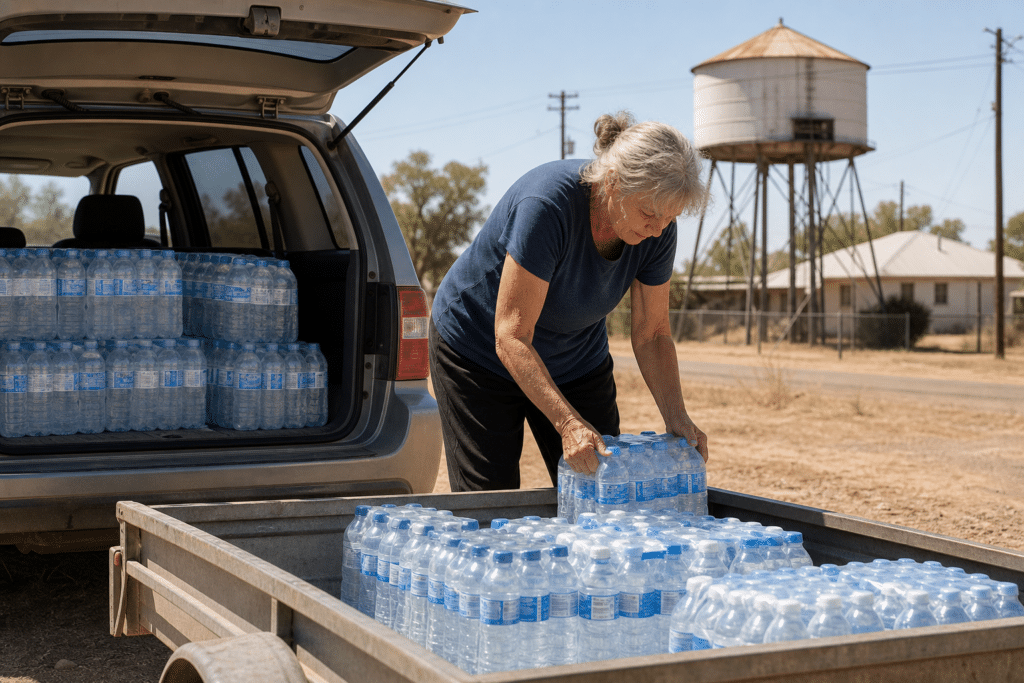
According to ABC News, many Hughenden residents have stopped drinking tap water because of its smell, taste and colour, relying instead on bottled supplies. Families are paying upwards of $50 a week, while unpredictable sediment levels can leave the water with a grainy texture.
Maree Christensen, who manages one of the town’s grocery stores, said customers buy more than 800 litres of water each week. Families purchase between four and six 10-litre bottles a week, and staff replenish shelves three to six times daily. A café has also moved to bottled water for its operations, including coffee machines, to avoid taste and maintenance issues.
Flinders Shire Mayor Kate Peddle said she had run baths for her children that were brown. The average service life of a bore drilled into the Great Artesian Basin is about 60 years, but most bores serving Hughenden are older. One was constructed in 1902, and replacing bores would cost $1 million each. The council budgets for incremental repairs but cannot get ahead of failures, she said.
A Local Government Association report puts the cost of urgent Queensland water infrastructure works at more than $5 billion. Queensland Water chief executive Dr Georgina Davis said much of the state’s infrastructure was built between 1945 and the 1970s and is beyond its designed lifespan. She said permanent funding for water infrastructure was lost in 2009.
Hughenden is expected to grow by 50 per cent over the next six years as the major hub for the $14 billion CopperString project. The town has secured $20 million in state funding for a water treatment plant, but construction will take several years and a further estimated $15 million is needed for other upgrades. The Queensland government said local governments provide drinking water and that it is supporting them through the permanent $100 million Works For QLD program and the $2 billion Residential Activation Fund.