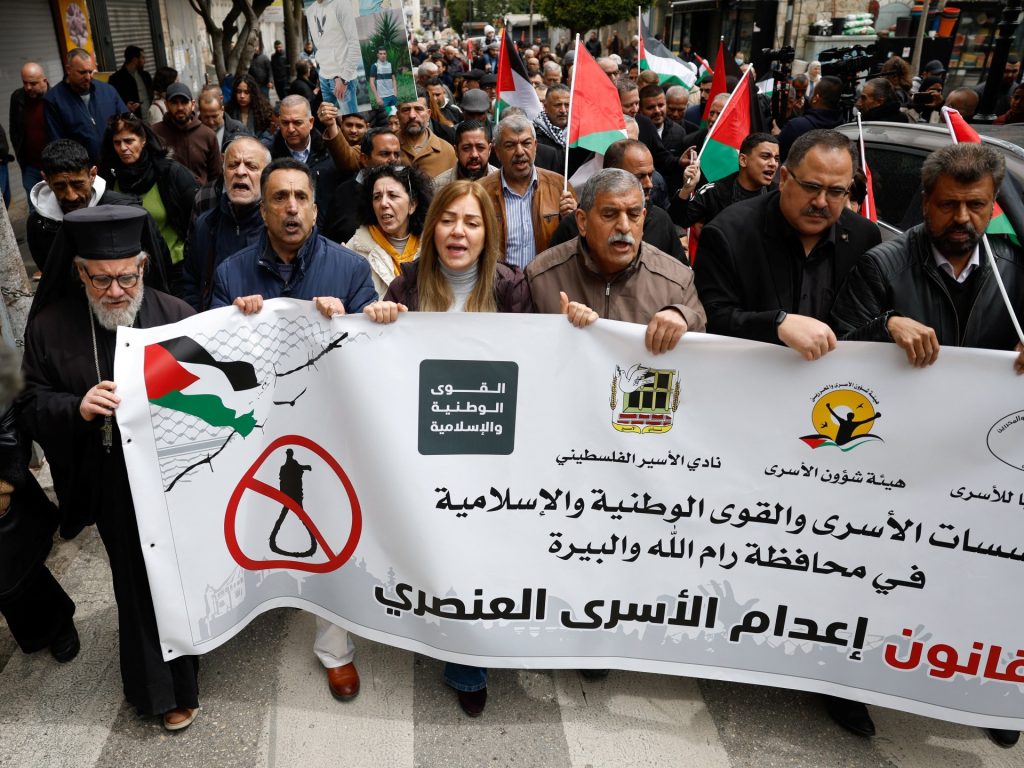













Arabic version: إسرائيل تسن قانون عقوبة الإعدام يستهدف المقاومة الفلسطينية
On April 1, 2026, Israel passed a death penalty law allowing it to hang those convicted of “terror offences” within an accelerated 90-day period. This legislation has drawn significant attention and concern from various human rights organizations and international bodies. According to Al Jazeera, the law reflects a broader strategy aimed at eliminating Palestinian resistance.
The timing of the law’s passage is particularly significant, occurring shortly after Israel dropped all charges against its soldiers accused of serious human rights abuses against Palestinian detainees. Critics argue that this legal framework is part of a systematic pattern of impunity for acts of violence against Palestinians while simultaneously criminalizing their resistance.
Recent months have seen a marked increase in violence against Palestinians, with reports indicating more than 7,300 violations by Israeli armed militias in the West Bank. This surge in aggression includes killings, property destruction, and the displacement of entire communities, further exacerbating the humanitarian crisis in the region.
The implications of the death penalty law extend beyond individual cases; it is seen as part of a broader effort to delegitimize Palestinian existence and self-determination. The law’s provisions allow for the execution of those who intentionally cause the death of another with the aim of harming a citizen or resident of Israel, effectively criminalizing the very act of Palestinian resistance to occupation. This raises profound questions about the future of Palestinian communities and the ongoing struggle for their rights and recognition under international law.