











Arabic version: سباق الائتلاف في إسرائيل بلا فائز واضح
According to Al Jazeera, Israelis voted on October 27 with no clear winner emerging, leaving the next government dependent on coalition negotiations. Initial counting by the Central Elections Committee placed Likud first as the largest single party with 27 seats, while official results are due on November 4.
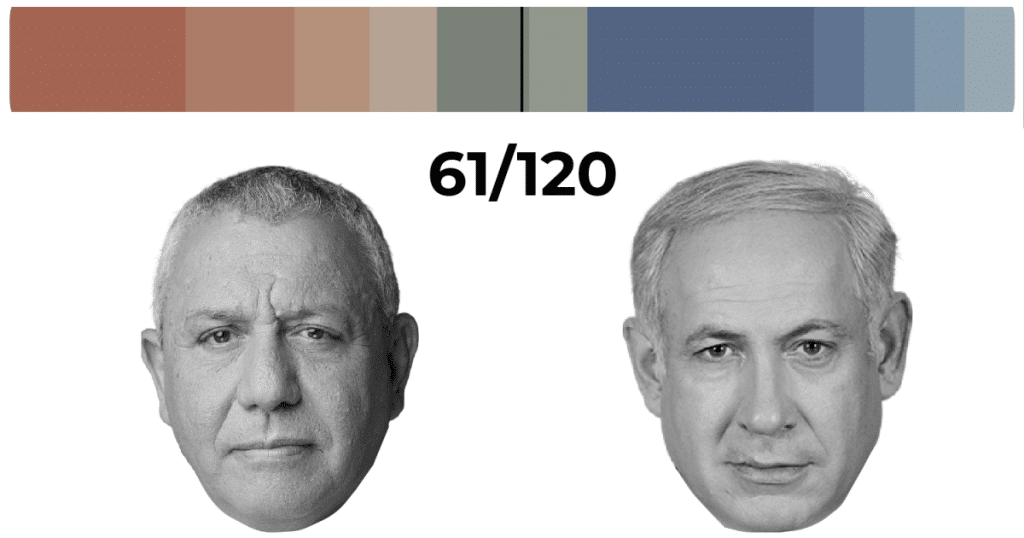
Israel’s 120-seat Knesset elects parties in proportion to their national vote share, provided they pass a 3.25 percent threshold. A governing coalition requires support from at least 61 politicians. Neither Benjamin Netanyahu’s bloc nor Gadi Eisenkot’s opposition bloc reached that level in exit polls or the initial count.
Netanyahu’s bloc was projected to win 54 seats, compared with 50 for Eisenkot’s. The four election-night exit polls also showed a narrow contest: Kan 11 and Channel 13 put the two blocs on 51 seats each; Channel 12 gave Netanyahu’s bloc 52 and Eisenkot’s 49; and Channel 15 projected 55 seats for Netanyahu’s bloc and 49 for the opposition.
Arab-led parties Ra’am and the Joint List could hold the balance of power, with exit polls putting their combined strength between 16 and 19 seats. However, coalition-building faces political barriers. Netanyahu has called a coalition with Arab parties “shameful”, while leading figures in the Jewish-led opposition have also ruled out governing with them.
After results are certified, Israel’s president will give the mandate to the Knesset member considered most likely to assemble a majority. That lawmaker has 28 days, with a possible extension of up to 14 days. If the attempt fails, another member can be given a chance; if no government is formed, Israel could hold another election. Netanyahu remains caretaker prime minister during the negotiations.