











Arabic version: مُلّاك الأراضي في كوينزلاند يطالبون بضمانات أقوى لمشروعات الطاقة المتجددة
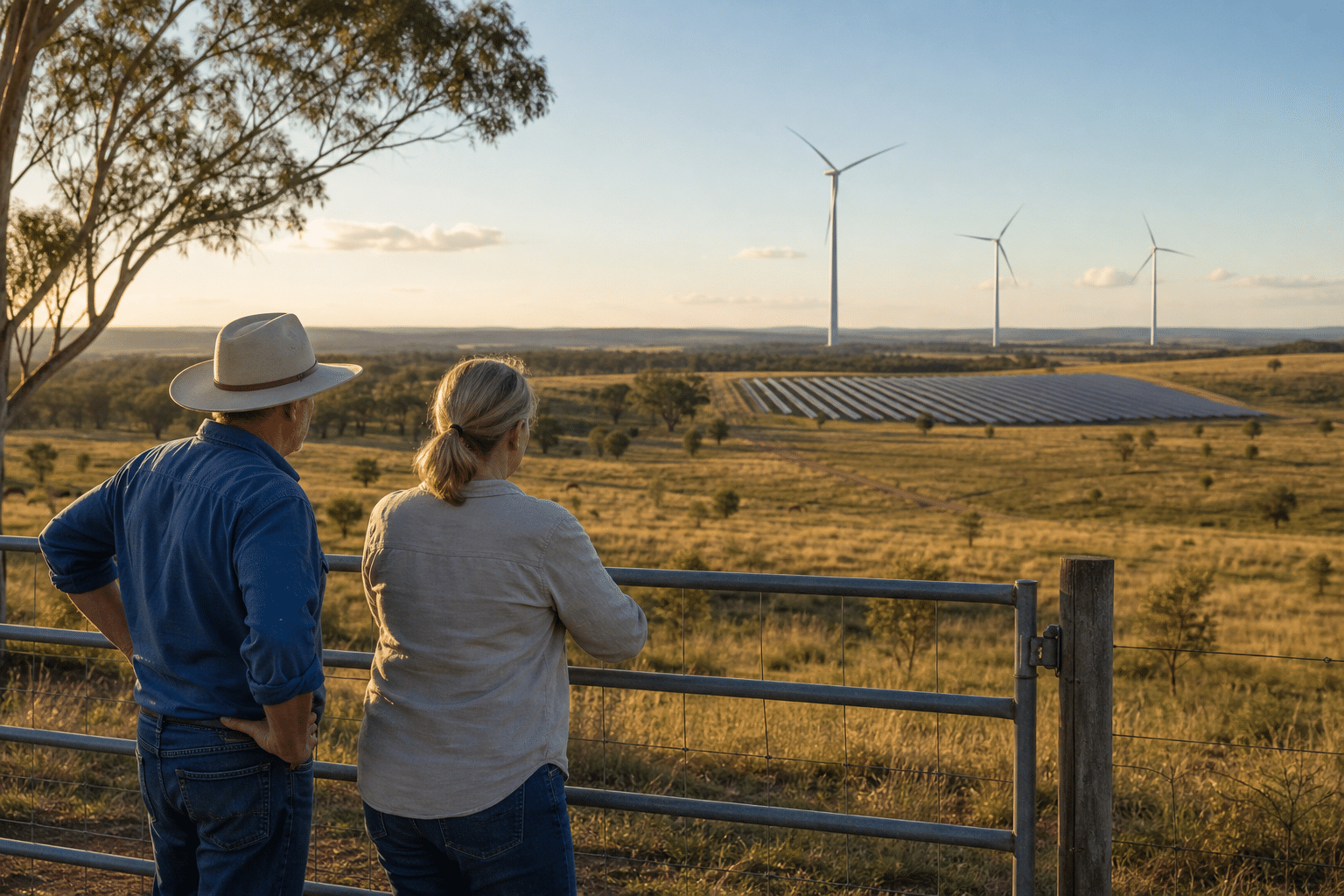
According to ABC News, a coalition of rural community groups is calling for tougher rules for renewable energy developments in Queensland, including mandatory turbine setbacks, stricter decommissioning requirements and stronger protections for neighbouring landholders. Regional Voices Queensland, an alliance of about 12 community action groups, held its first major meeting at the Franz family farm near the Wambo Wind Farm at Diamondy, 280 kilometres north-west of Brisbane.
More than 70 people, including landholders, farming industry representatives and politicians, attended the meeting co-organised by Member for Maranoa David Littleproud. RVQ chair and Property Rights Australia board member Jim Willmott said groups working on separate projects had identified common concerns. The alliance wants a minimum three-kilometre setback from residences and up-front bonds to cover turbine decommissioning.
Farm co-owner Glenn Franz, whose property does not host turbines, said 13 turbines were located around his family within a three-kilometre zone. He said existing protections had gaps, particularly concerning visual amenity and the financial risk of dismantling turbines when operations end. The Wambo Wind Farm, a joint venture between state-owned Stanwell and energy infrastructure group Cubico, received planning approval in 2020.
Queensland’s wind farm code has not allowed developers to meet requirements simply through a specified separation distance since 2024. Projects must meet all performance outcomes, including noise criteria at neighbouring dwellings. Since 2025, new wind farm applications have required impact assessment and financial security for decommissioning, while developers must negotiate a community benefit agreement with the relevant council before applying. RVQ says the wording of the financial-security requirements remains vague and could leave landholders or taxpayers liable.
AgForce policy adviser Anna Lethbridge said protections should extend beyond project hosts to neighbouring producers, including safeguards against contamination and effects on agricultural accreditation. Mr Littleproud said affected landholders were seeking practical safeguards rather than opposing renewable energy projects outright. RVQ will continue advocating for stronger protections for people affected by developments.