











Arabic version: ارتفاع أعداد الأرانب في أنحاء أستراليا
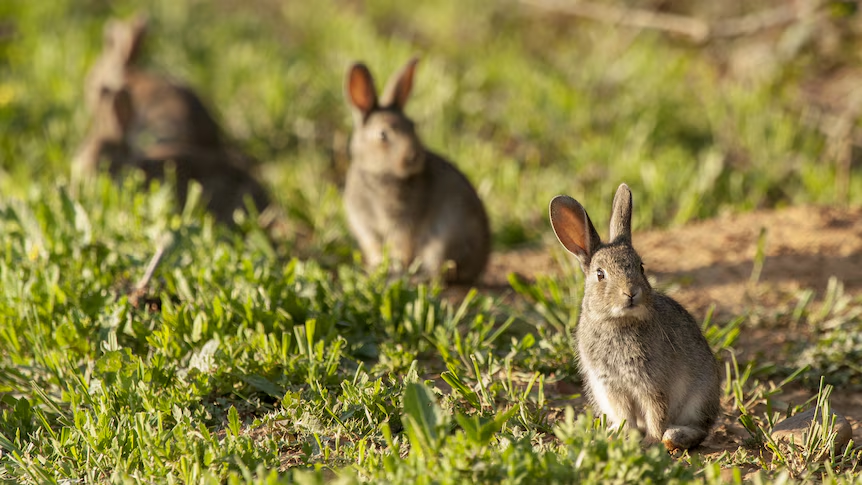
According to The Guardian, rabbit populations are booming in parts of Australia after wet conditions, while scientists warn that growing resistance to disease-control viruses is weakening a key tool against one of the country’s most damaging feral pests.
At Bon Bon Reserve in South Australia’s arid centre, Jojo, a five-year-old kelpie, jack russell and whippet cross, helps conservation staff find rabbit warrens. The dog flushes rabbits back into burrows so warrens can be mapped, fumigated or ripped up. Recent rain has produced fresh growth of native plants, but rabbits are using it as food and breeding fuel.
Dr John Virtue of the Centre for Invasive Species Solutions said increases had been noticed around the country, including southern Western Australia, Canberra, areas around Adelaide, the New South Wales Riverina and southern Queensland. In Albany, rabbits have reached “plague-levels” on farms and at a golf course. Rabbits can breed year round when food is plentiful, and a population can grow tenfold in one season.
European rabbits were introduced on the first fleet in 1788, though research traced their continent-wide spread to 24 rabbits brought in by settler Thomas Austin in 1859. Current estimates put Australia’s rabbit population near 200 million, although there is no formal national monitoring. A study found rabbits negatively affected 329 threatened species, more than any other invasive pest.
Myxoma and calicivirus previously drove major declines, with the accidental 1995 release of calicivirus cutting rabbit numbers by up to 95% in arid areas. But rabbit populations are developing resistance. The government announced a program in July to develop new calicivirus variants, while landholders can use fencing, poisoning, warren destruction and licensed shooting. Peri-urban rabbit reservoirs also remain a challenge, particularly where animals shelter beneath buildings or in gardens.