













Arabic version: تقرير يحدد الظروف وراء ازدهار الطحالب في جنوب أستراليا
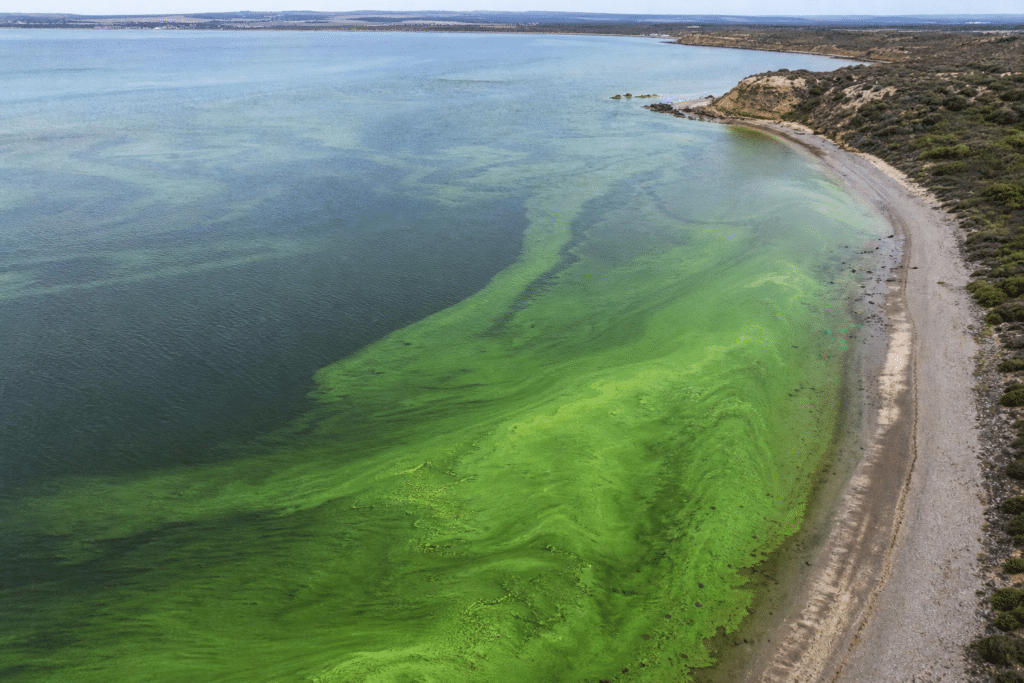
According to ABC News, a South Australian government report has found that floodwater, a coastal upwelling and a marine heatwave combined to create conditions for the state’s catastrophic harmful algal bloom, rather than any single trigger.
The preliminary investigation by the South Australian Research and Development Institute found the bloom developed and intensified during an unprecedented marine heatwave. The report said calm conditions, reduced wind mixing and enhanced water-column stratification associated with the heatwave were key enabling factors for motile dinoflagellates such as Karenia. It also found the event followed a period of prolonged environmental pre-conditioning.
SARDI executive director Professor Mike Steer said the findings reflected “a convergence of many different things”. He said understanding the fundamental drivers would be necessary if South Australia or Australia were to develop a forecasting index for harmful algal blooms.
The bloom, first detected in March 2025 and marked by foamy and discoloured water, devastated South Australia’s coastline and resulted in the deaths of significant numbers of marine life. Professor Steer said there were notable gaps in the data, which researchers would seek to fill.
Primary Industries Minister Clare Scriven said the report had undergone review by independent reviewers from Tasmania and the United States, as well as consideration by the Algal Bloom Taskforce. Ecologist Faith Coleman welcomed its release but called for more data, including information about hazardous species beyond Karenia. The taskforce will continue research on bloom persistence, biochemicals, fisheries and marine ecosystems to improve preparedness for future events.