











Arabic version: تونس تطلق أول تعداد زراعي رقمي
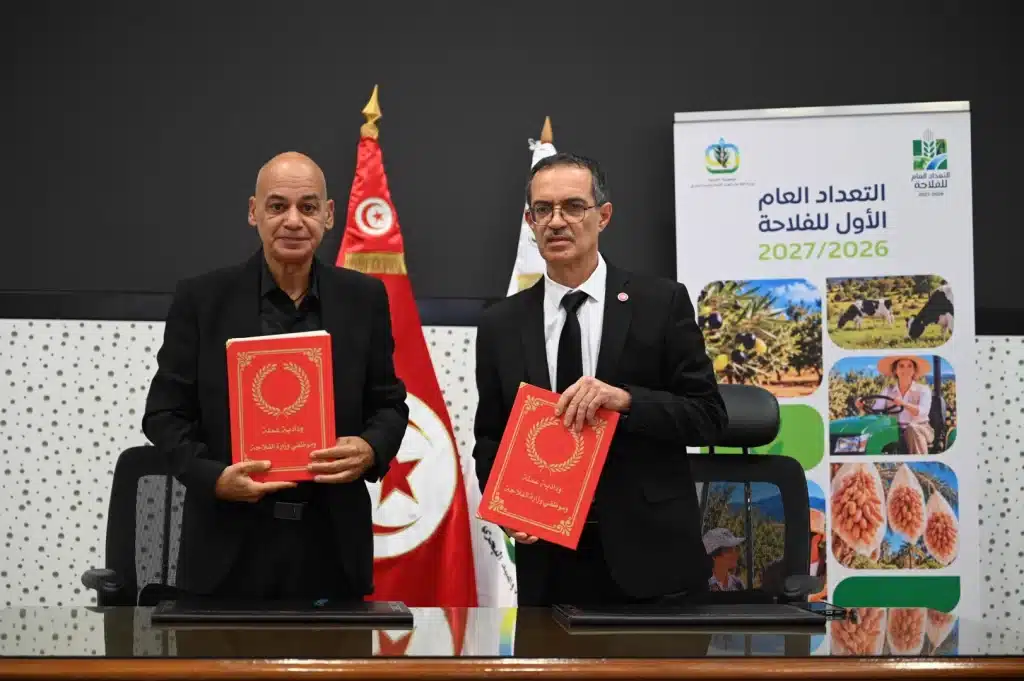
According to Allafrica, Tunisia has launched its first general digital agricultural census, covering 2026-2027. Agriculture, Water Resources and Fisheries Minister Ezzeddine Ben Cheikh announced the initiative on Friday, with nationwide field data collection scheduled to begin in November 2026.
The census is intended to create an up-to-date, comprehensive reference database on agricultural holdings, including their geographic distribution, activities, resources, structural features and productive characteristics. The information is expected to produce indicators on the agricultural sector, the diversity of production sectors and their particular development characteristics at national and regional levels.
Ben Cheikh described the census as a strategic decision-making tool. Its results are intended to help direct public and private investment to areas where it is most needed, improve planning for development projects and programmes, evaluate agricultural policies, and rationalise the use of natural and land resources. The ministry also aims to turn the data into decisions and programmes that can improve farmers’ working conditions, production and investment.
Advanced digital tools will be used for collection and processing, including tablets, geolocation technologies and Geographic Information System tools. The minister said these methods are intended to ensure accurate farm locations, improve data quality and speed processing. He added that the results would help strengthen agriculture’s capacity to address economic, climate and food-security challenges.
Emna Jellouli, representing the Directorate-General for Agricultural Studies and Development, said the exercise would support scientifically based sectoral strategies, improve governance of development programmes and projects, stimulate investment, and support small and medium-sized farms and communitarian enterprises. The Ministry of Agriculture is implementing the project with the Grain Board, the National Institute of Statistics and the Directorate-General for Agricultural Studies and Development.