









Arabic version: تدقيق في مقدمي رعاية المحاربين القدامى بسبب وصفات القنب
According to ABC News, a Four Corners investigation found that some for-profit providers targeting veterans promoted DVA-funded services while concerns were raised about high-dose medicinal cannabis, patient contact and billing practices.
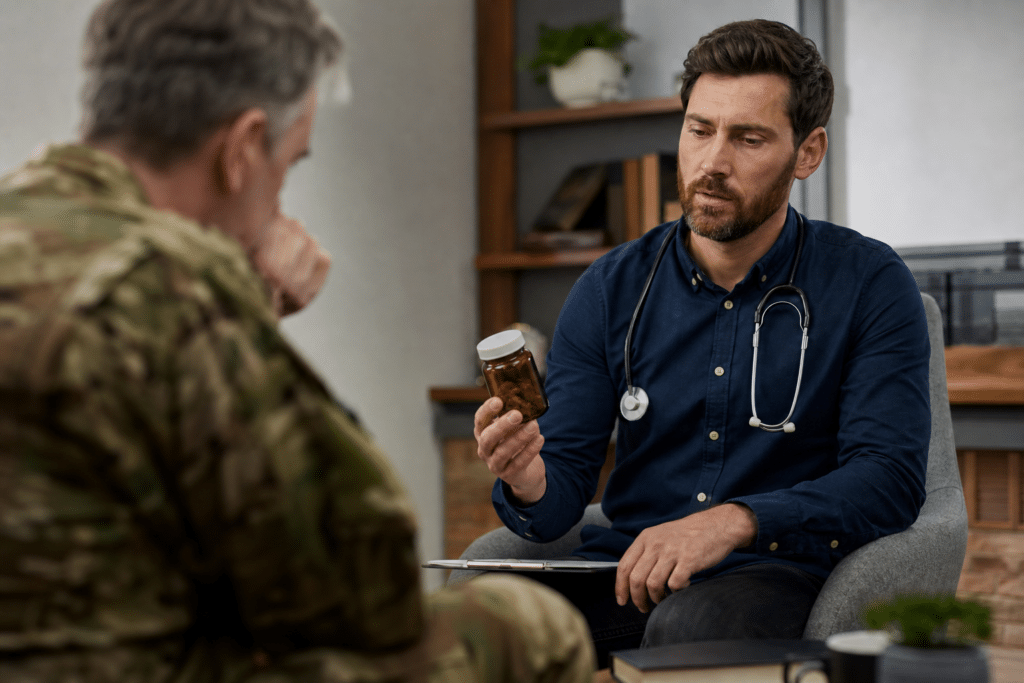
Steve Johnstone, an army medic who served in Afghanistan, said he was prescribed high-THC cannabis by doctors he had not spoken to for nearly two years. A prescribing doctor sought DVA funding to increase his daily THC dose from 25mg to 1,220mg without speaking to him. Three experienced medicinal cannabis prescribers told Four Corners that 1,220mg a day was unacceptable and far beyond doses they had seen prescribed.
Johnstone said he became addicted to THC gummies and cannabis, experienced paranoia and suicidal thoughts, and was admitted to a specialist psychiatric ward for veterans in April after an acute mental health crisis. His records showed quarterly calls with a nurse under a DVA-funded Coordinated Veteran Care plan, but no contact with TVH GPs until March. One doctor later wrote that cannabis supply should stop because it was causing “REAL HARM”.
DVA has since tightened its medicinal cannabis rules. Veterans must now see a specialist doctor or GP face-to-face, DVA will fund only three products at once, and it no longer funds THC gummies. VeteranCann said its clinical model operates in line with the changes. Total Veteran Healthcare rejected any suggestion of fraud, while saying it was working with DVA to correct any overpayments where claims did not meet requirements.
The investigation also examined calls offering esketamine treatment to East Timor veterans Andrea and Daryl Duckett. DVA spent more than $11 million on esketamine in the first eight months of the year, at almost $27,000 per patient. GoodMind Therapeutics said it did not cold call members of the public.