











Arabic version: اختبار جحور طينية لتنانين كانبيرا النادرة عديمة الأذن
According to ABC News, researchers in Canberra have installed 100 specially made terracotta burrows at two sites to help the critically endangered Canberra grassland earless dragon cope with summer heat and provide potential nesting spaces. Researchers estimate that 100 or fewer of the reptiles remain in the wild.
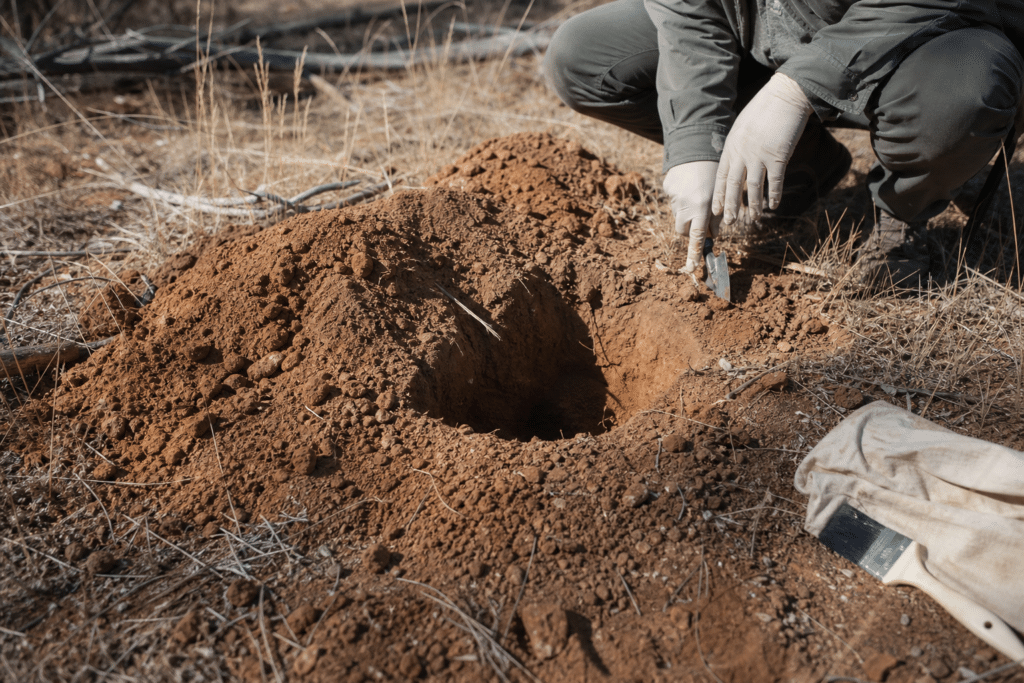
The clay tubes are designed to mimic the spider burrows where the dragons usually shelter and nest. Placed about 20 centimetres below ground, they offer a thermal gradient that lets the animals move up and down to seek a preferred temperature. ACT Parks and Conservation dragon recovery coordinator Ben Croak said ground temperatures in grasslands have reached 70C during summer, while the small reptiles cannot survive temperatures above 40C.
Unlike PVC tubes previously used to monitor the species, the terracotta structures are intended to support egg-laying. Clay retains moisture, which the team hopes will reduce climate impacts and assist egg incubation. University of Canberra PhD student Ryan Colley, who has studied the species’ genetics since 2020, said the dragons had taken up the new burrows quickly and appeared to use them in preference to PVC tubes. He monitors the sites with an endoscope and has seen dragons curled up at the bottom of the burrows.
Making the burrows presented its own challenge. Dr Croak sought an artist or workshop able to produce 100 tubes, each 20cm long and as thin as possible while retaining structural integrity. Tom from Strathnairn Arts in North Canberra made the tubes and joined the field team to see them installed.
The shelter trial addresses only one part of the species’ conservation challenge. Mr Colley said ACT dragon populations are small and becoming genetically isolated despite being separated by short distances. He said translocating animals between sites was the first step in an effort to increase genetic diversity.